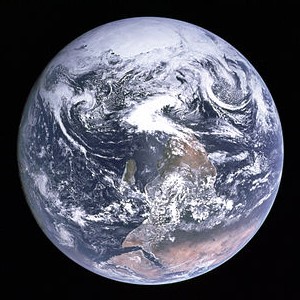
 There are good reasons to think that Earth has turned over on various occasions. But who can be surprised that this perception—so removed from everyday experience—seems less than instantaneously persuasive?
The good reasons include telling evidence in narrative testimony and correctly interpreted myths of the ancients, embedded patterns in ancient cultures that give evidence of inversions, and the insights and arguments of two formidable researchers. Now we can: add new reasons that strengthen the case; specify the very approximate dates of four inversions; extend the theory to the five great mass extinctions of prehistory; comprehend that Earth is actually prone to inversion; and point to where to find more evidence. Understanding inversions helps us correct errors in interpreting past planetary and Earth science while providing clues relevant to climate change.
Tags: Ancient China, Archer Yi, Bronze Age catastrophes, Earth, geomagnetism, inversion of Earth, magnetic reversals, Mars, mass extinctions, Pacific Basin, terrestrial, tippe top, Velikovsky, venus, Warlow
 Once a leading theory of the origin of the Earth-Moon system, the Capture Theory is intuitively plausible. The numerous instances of moons with retrograde orbits show that capture is fairly common. The lunar orbit’s three moments of inertia are consistent with a past very eccentric orbit, suggestive of capture. However, it was thought that the Moon would have to come from a different part of the solar system to account for its very depleted iron compared to the Earth’s iron, which means that it would approach the Earth at a high velocity that would prevent capture. Researchers have searched in vain for a braking mechanism that would slow it down so it could be captured. Still, the accumulated evidence and arguments make the Capture Theory a viable one.
But
Tags: Capture theory, Earth, earth science, Earth-Moon system, Giant Impact, Jupiter, Mars, Mercury, moon, origin of Earth, origin of Mars, origin of the Moon, Outer Solar System Origin of the Terrestrial Planets, oxygen isotope ratios, planetary science
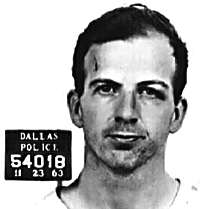 New evidence and analysis suggest that the KGB was behind the 1963 assassination of President John F. Kennedy.
Some observers have always considered the Soviets a likely suspect. Lyndon Johnson evidently did. According to the House Select Committee on Assassinations’ chief counsel, Robert Blakey, after the assassination the Soviets went on nuclear alert. Johnson assured the Soviets that the US had no evidence of Soviet involvement and planned no reprisals. He also ordered the suppression of any hint of a KGB conspiracy for fear that an outraged public would demand retaliation that would lead to war. The Soviets had a palpable, powerful motive for assassinating Kennedy: to gain revenge for the humiliation of Khrushchev and the USSR in the 1962 Cuban missile crisis. The assassination also removed a popular young president and demoralized many Americans, while the cover-up alienated them from their government and media.
Certainly, the idiosyncratic odyssey of Lee Harvey Oswald into the Soviet Union and a Russian marriage as well as his contacts with Soviet diplomatic offices preceding the assassination afforded the KGB many opportunities to interact with him. Thus the KGB is the elephant in the living room of suspects in this case. Yet repeated investigations have failed to turn up specific evidence that would implicate the KGB.
Tags: conspiracy theories, Cord Meyer, Cuban Missile Crisis, Dorothy Kilgallen, Gheorghe-Dej, Ion Mihai Pacepa, Jack Ruby, John F. Kennedy, KGB, Lee Harvey Oswald, Mary Meyer, Nikita Khrushchev
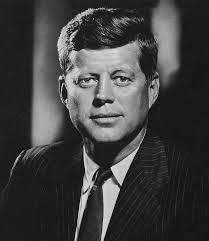
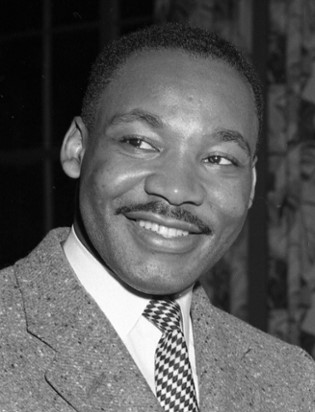
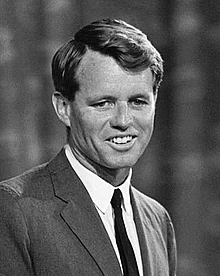 There are good reasons to think that the KGB arranged the murders of John F. Kennedy, Martin Luther King, and Robert F. Kennedy, as well as of other Americans. Note: “good reasons”, not definitive proof. In each case, I will argue that We must consider the KGB the leading suspect (in the JFK assassination, a KGB rogue and the Mafia collaborated while the KGB acted as a ghost partner). This perception can guide further investigation that can result in the more definitive finding that the KGB arranged these and related murders.
First, I will explain how the KGB and Mafia have emerged as the prime suspects in the JFK assassination. Not only was this the most important and best-known case. New evidence and interpretation point to the KGB’s role in particular and have implications for the other murders. Second, I will treat each of ten likely KGB murders in summary fashion. Third, I will touch on factors that have hampered resolution of these cases for many decades. Fourth, comparing the cases, I will identify characteristics of the KGB’s art of deniable murder. Fifth, I will draw some conclusions.
*****
1. The KGB and JFK
Tags: Arthur Paisley, assassinations, CIA, conspiracy theories, Cord Meyer, Dorothy Kilgallen, FBI, Florence Pritchett Smith, George de Mohrenschildt, Ion Mihai Pacepa, Jack Ruby, John F. Kennedy, Kennedy assassination, KGB, Lee Harvey Oswald, Marilyn Monroe, Martin Luther King, Mary Meyer, MKULTRA, Nikita Khrushchev, Robert F. Kennedy, Sirhan Sirhan, William Colby, William J. Bryan MD
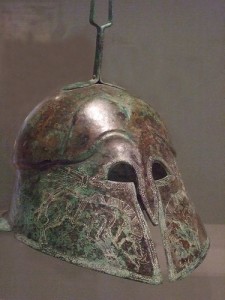 Students have long struggled, often in vain, with the rules of Latin grammar. The structure of sentences in Latin seems strange to the mind of an Indo-European native speaker. Also strange is Latin’s heavy use of gerundive and absolute constructions: all those verbal nouns entail a very different pattern of thinking than goes on in modern Indo-European languages.
Tags: ancient history, Dorians, Etruscan, Greek, Iliad, Ilion, Latin, myths, Roman, Trojan, Troy, Ugric, Ural-Altaic
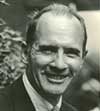 Carroll Quigley (1910-1977) was a noted historian, polymath, and theorist of the evolution of civilizations.
Born and raised in Boston, Quigley planned to pursue a career in biochemistry. But he soon shifted to history, to which he brought an analytical, scientific approach and a questing spirit. After receiving a B.A., M.A., and Ph.D in history from Harvard University, he taught at Princeton and Harvard. In 1941 Quigley joined the School of Foreign Service at Georgetown University, where he came to teach a highly regarded course, “Development of Civilization”.
Tags: Bill Clinton, Carroll Quigley, civilization, conspiracy theories, historical analysis, history
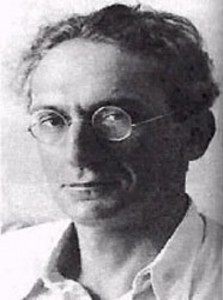 Based on his interpretation of ancient sources, Immanuel Velikovsky argued famously that Venus had emerged from Jupiter as a comet; interacted with the Earth and Mars in the second and first millennia BC, causing the Bronze Age catastrophes; and then finally settled into a nearly circular orbit of the Sun.
Three lines of reasoning support a Revised Venus Theory.
First, instead of the various unpersuasive suggestions that Velikovsky and others have made for how a cometary Venus could have emerged from Jupiter, we should consider the possible consequences of the immense gravitational field of Jupiter, which pulls toward it a stream of asteroids and comets, as with Shoemaker-Levy 9 in 1994.
Tags: Abu Simbel, Athena, Black Drop, Great Serpent Mound, Jupiter, Mars, Metis, Nefertari, planetary science, Poseidon, Ramses II, tidal locking, Velikovsky, venus, Zeus
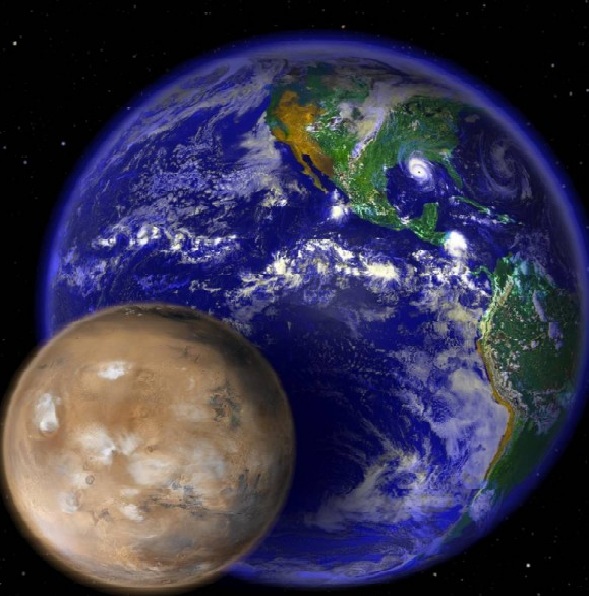 There’s no shortage of candidates for the cause of the mass extinctions of prehistory. But experts have found flaws in every one.
Asteroid impact at Chicxulub, Yucatan clearly played a role in the Cretaceous-Paleogene (K-Pg) extinction that wiped out the non-flying dinosaurs 66,000,000 years ago, though scientists point to the serious disruptions that had begun hundreds of thousands of years before with the basalt flows of the Deccan Traps. Giant basalt lava flows that poisoned the atmosphere and oceans played a role in four or perhaps all five major extinctions. But other enormous basalt flows have not caused extinctions, nor did they cause the tsunamis associated with various extinctions. Researchers have suggested many other mechanisms, but there’s no consensus at all.
Lurking in the background, however, is a quite plausible cause, one that would have possessed the power to set off the volcanic activity, air pollution, mass wasting, sea level shifts, loss of oxygen in oceans, climate changes, and other phenomena associated with the extinctions.
The Martian Theory
Tags: catastrophe, Chicxulub, climate change, Deccan Traps, dinosaurs, earth science, extinctions, geology, great mass extinctions, Mars, paleontology, planetary science, prehistory, tsunamis, Valles Marineris
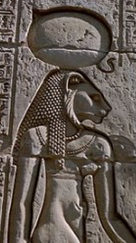 Sekhmet (“The Mighty One”), lioness goddess of ancient Egypt, spread terror with her bloody rampages. Yet she became the protector of kings and a favorite personal goddess of millions of Egyptians.
Why did Egyptians have a goddess who required such assiduous and even obsessive propitiation? Why did other Egyptian goddesses play roles similar to Sekhmet’s? What explains Sekhmet’s dual nature as destroyer and protector? Why did Egyptians call her the Eye of Ra? Why did she originally appear with an oval disk on her head?
We now have good answers to these questions. But in order to understand them, we need to see why we should think that Sekhmet was Planet Venus. And that requires us to investigate a major case of scientific rejectionism.
Tags: Ancient Egypt, Bastet, Bronze Age catastrophes, Egyptian medicine, Hathor, isis, Mars, Mut, myth, Ra, Sekhmet, Tefnut, Velikovsky, venus