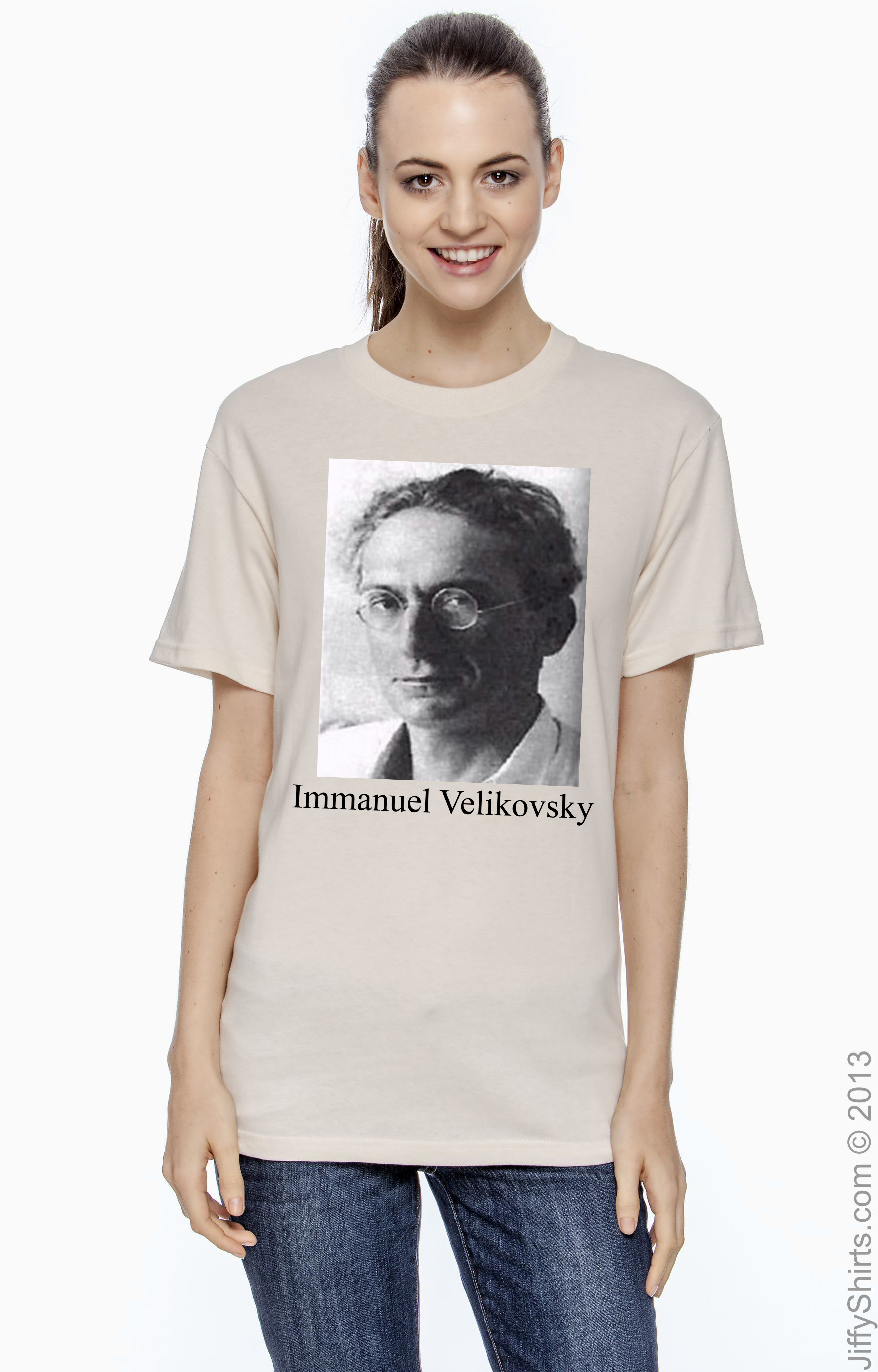
 Honor Immanuel Velikovsky, a great, misunderstood scientist! This striking, 100%-cotton Immanuel Velikovsky T-shirt, designed by Scientia Press, will get you and Velikovsky plenty of attention! Medium size. Wash in cold water.
To order yours,

Honor Immanuel Velikovsky, a great, misunderstood scientist! This striking, 100%-cotton Immanuel Velikovsky T-shirt, designed by Scientia Press, will get you and Velikovsky plenty of attention! Medium size. Wash in cold water.
To order yours,
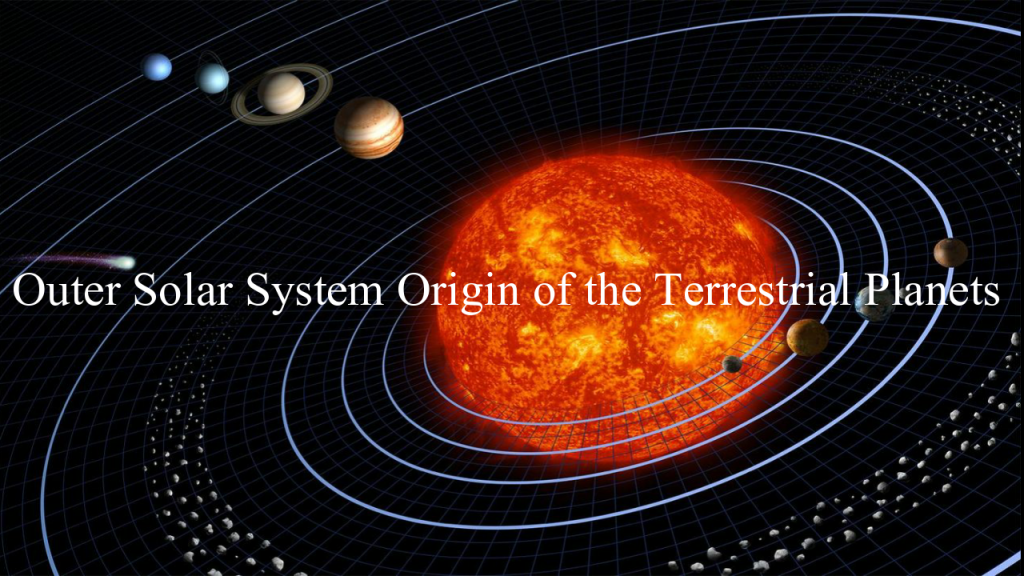
Historian and scientific researcher Kenneth J. Dillon discusses his theory The Outer Solar System Origin of the Terrestrial Planets (OSSO). OSSO explains how Mercury, Earth, the Moon, and Mars originated outside the orbit of Saturn, then were pulled inward by Jupiter’s gravity. Tidal friction heated them to incandescence, then they tidally locked to Jupiter and were separated, moving as comets into their present orbits. See also https://www.scientiapress.com/outer-solar-system-origin.
Kenneth J. Dillon has a Ph.D in history from Cornell University and has taught at several universities.