
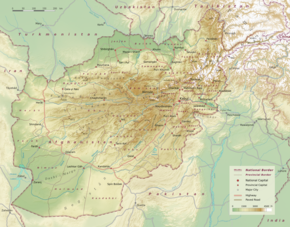
[August 16, 2021:  The U.S./NATO withdrawal and Taliban takeover of Afghanistan have put an end to this issue, though it remains of historical interest.]

[January 31, 2018:  This article was published in 2008. While some of the details have been overtaken by events, the main thrust of the argument has changed little.  Keeping troops in Afghanistan for 16 years by now, with no end in sight, seems so palpably contrary to American interests that we must ask whether the U.S. Government has an unstated motive.  By far the most plausible such motive is that the Israel Lobby wants us to keep our troops in Afghanistan to put pressure on Iran and to provide bases in the event of a war against Iran.  In turn, the power of the Israel Lobby and the consequent possibility of war against Iran motivate the U.S. military to seek to remain.  The cost of the war has climbed well beyond $1 trillion.  Thousands of American soldiers have been needlessly killed, and thousands more maimed.]

[2008] According to media reports, American commanders in Afghanistan are asking for 5-10,000 troops above the 4,000 approved for deployment and the 10,500-12,000 already requested–for a total of up to 26,000. 32,000 are currently in Afghanistan. Overshadowed by the elections and global financial crisis, this proposed major escalation is moving ahead with little debate. And it is not a temporary ”surge”; the generals are seeking these new troop levels for the duration of the war, however many years that may involve.
Before we make this move, a weighing of pros and cons would appear to be in order.

Tags: , , , , ,

[December, 2008]  No matter how deeply he or she gazes into a crystal ball, the world’s most far-sighted economic guru would not find it easy to predict the long-term outcome of the current Global Financial Crisis (GFC). So it might seem a bit premature to start drawing inferences from the collapse of renowned financial firms, market gyrations, and massive government interventions, especially if these inferences relate to the Global War on Terrorism (GWOT). Nonetheless, there is a compelling reason to endeavor to do so: correctly assessing the impact of the GFC and its economic consequences on how the War can or should be fought may save us from making serious errors. Considering how many serious errors have already been committed in both the GWOT and the GFC, this seems highly desirable.

Tags: , , ,


readersKnowing how to read documents in a sensitive and analytical manner is a skill that has wide application in career and personal situations. Techniques for evaluating documents can also be used to interpret objects of material culture and art. Here are 20 questions that can help us analyze documents.  While they can be applied systematically, asking them randomly in brainstorming fashion may lead to even more rewarding outcomes.

  1. What kind of document is this?
  2. When and where was it written?  What were the circumstances?
  3. Who is the author,  or what can we infer about an anonymous author?
Tags: , , , , ,

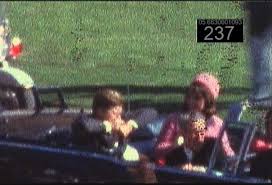
kennedyUnfinished business in a nation’s history can undermine citizens’ trust in government and sense of participating in a meaningful collective life.

In the case of fatal moments such as assassinations and terrorist attacks, the damage adds to the impact of the attacks and helps the attackers achieve their goals of demoralizing the people and fraying the social fabric. Compounding the problem, government agencies and the media often show reluctance to reveal what they learn because they lack 100% assurance of its validity, because they fear the public reaction, or because they are covering up their own mistakes. As a result, people often believe that certain crimes remain unsolved or are even unsolvable when in fact they have already been solved but the information is being denied to the public.

Tags: , , , , , , , , , , ,

jdeyIt is a curious fact that, after extensive investigations accompanied by intensive media coverage, the United States Government has failed to get to the bottom of any of the three major attacks launched against it by al Qaeda in the autumn of 2001.

Three attacks?

Yes, and therein lies part of the problem.

When we speak of intelligence failures, we ordinarily refer to the mistakes made by intelligence agencies in the time leading up to an event. But there is another kind of intelligence failure: Retrospective Intelligence Failure (RIF).

Tags: , , , , , , ,

Caffeine, the world’s most widely used psychoactive substance, attracts a lot of research. Caffeine also attracts controversy. Some scientists argue that caffeine is a benign and useful drug whose side effects are only of concern in regard to a small number of “sensitives”, including those with pre-existing anxiety or similar symptoms. They note that caffeine improves attention, reaction time, numeric and verbal memory, and work output and endurance in long-term exercise.

But other researchers claim that caffeine causes multiple damaging effects ranging from boosting blood pressure to disrupting sleep, and that these affect hundreds of millions.

Tags: , , , ,
Copyright © Scientia Press, 2026