
Rosemarie, A Novel of Discovery Science


As she struggles with a rare disease at the American Embassy in Turkey, philosopher Rosemarie devises a theory of the red blood cells.  Acting as a metacolony in real time, they constitute the Original Intelligence of humankind’s pre-neuronal ancestors and possess remarkable properties.  Peculiar dreams lead Rosemarie to other theories.  They also warn of terrorist attacks.  Her diplomat husband is wounded fighting off jihadists.  The ambassador is smitten by her charms.  A CIA psychiatrist stigmatizes her with a fraudulent diagnosis.  Entranced by a Turkish folktale, Rosemarie befriends a handsome young Turk….


Readers say:

“Excitement and intellectual depth.”

“The ending was very satisfying.”

“[I]t’s a good read and I recommend it.”  (Goodreads)

Goodreads rating:  4.5 stars

See the author’s biosketch at About Us.


Kindle ebook @ $5.99


Domestic

International
Tags: , , , , , , , , , , , , , ,

American history contains two outstanding wrongs committed against groups of us:  the killing, displacement, and mistreatment of Native Americans and the subjection of African Americans to slavery and ongoing discrimination.  Various thinkers have suggested kinds of reparations for these acts; but views differ sharply on whether reparations are justified, who should pay them, who should receive them, and what amount is fair and feasible.  Instead of serving to heal our country, reparations have become one more divisive issue.
Yet reparations offer an alluring vision:  via a concrete yet also symbolic national gesture, we could take a major step toward healing wounds, overcoming the past, and moving together into the future.  They could counteract the negativity of partisan politics and lead to a happier multiethnic and multiracial society.  So we need to think through how to bring Americans to comprehend and support a plan for reparations that will help us flourish as a united people.

Fortunately, a related issue affords us an excellent opportunity

Tags: , , , , , , , , ,

Mary Meyer

The assassinations of the 1960s and the tragic events of 2001 have resisted resolution for many years.  Now young Americans have an opportunity to contribute to solving them.  Steven J. Dillon and Kenneth J. Dillon of Scientia Press suggest why the investigations have not borne fruit, how we can reach more clarity, and what special strengths young Americans can bring to the effort to get to the bottom of them.  See also https://www.scientiapress.com/kgb-theory, https://www.scientiapress.com/jdey-anthrax-mailings, and www.scientiapress.com/al-qaeda-shoebomber-flight-587.


Young Americans Can Help Resolve Our Historical Tragedies

Steven J. Dillon and Kenneth J. Dillon, June 12, 2025

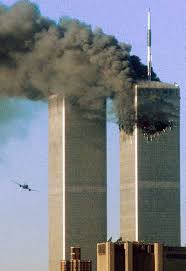
Both the assassinations of the 1960s–John F. Kennedy, Martin Luther King, and Robert F. Kennedy–and the tragic events of 2001 changed the course of the country yet left more questions than answers. Older generations of Americans have extensively researched and debated theories of these events but have failed to converge on solutions even as their views have hardened. For 2001, they don’t even agree on which events should be included. Now, however, young Americans, many of whom were not even alive in 2001, have an opportunity and a duty to investigate these events and uncover truths that have been hidden but not necessarily lost.
Investigations into the assassinations of the 1960s reveal several clues,

Tags: , , , , , , , , , , , , , ,

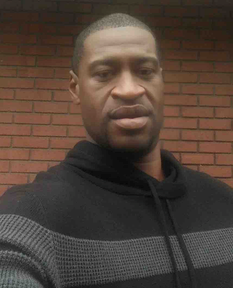
The death of George Floyd in Minneapolis on May 25, 2020 set off a nationwide surge of protests over police brutality against African-Americans.  On April 20, 2021, the jury found Derek Chauvin, the police officer who pressed his knee on Floyd’s neck for nine minutes and 29 seconds, guilty of murder in the second and third degrees and manslaughter in the second degree.  Worldwide attention to Floyd’s death has focused on racial disparities in the United States as well as on the specific issue of police brutality against African-Americans.
Still, even though the jury has come to its verdict, to understand our history correctly, we must consider a different possible motive for the killing.

Tags: , , , , , ,

 Mary Pinchot Meyer

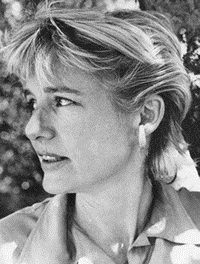
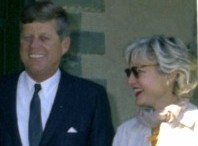
On October 12, 1964, Mary Pinchot Meyer was murdered on the canal towpath in Georgetown1. A divorced artist from a prominent family, Meyer was known by insiders to have been President John F. Kennedy’s senior female consort during his White House years, though the story never leaked to the public.

Her murder and the ensuing trial of Raymond Crump, Jr., an African-American laborer found by the police in the vicinity of the murder, drew a good deal of attention at the time. Crump had been identified by a gas station attendant helping start a car on a road overlooking the canal. Hearing cries of “Somebody help me. Somebody help me” and two shots, the attendant ran to look.

Tags: , , , , ,

ST-C310-87-63Sometimes a storyteller misses the real meaning of the story.

By all accounts, the Cuban Missile Crisis was the most dangerous episode of the Cold War.  The United States and the Soviet Union came frighteningly close to launching nuclear attacks at each other.  Only fear, luck, and occasionally inspired negotiating moved them onto the path of resolving the crisis−via a humiliating Soviet withdrawal in the face of U.S. nuclear superiority.

Historians have identified many motives for the initial Soviet decision to place missiles in Cuba. 

Tags: , , , , , , , , , , ,

On April 27, 1996, 76-year old William Colby, former director of the CIA, disappeared from his vacation home on the water at Rocky Point, Maryland.  Colby had spent the day at a marina fixing his sloop.  He returned home after 6 pm, phoned his wife, who was visiting her mother in Texas, and told her he was tired and would eat supper, then go to bed.  He watered his trees, met with his gardener and his visiting sister around 7:15 pm (sunset was at 7:57), and fixed himself a meal.  The next day there was no sign of him.  Eventually, a neighbor phoned the police.  They found his supper half-eaten.  The computer and radio were on.  His canoe was missing.1

By the next day a full-scale search with helicopters and divers was under way.

Tags: , , , , , , , , ,

August 4, 1962.  Celebrity actress Marilyn Monroe died in her bedroom in Los Angeles (or in the guest house near her house, from which she was carried back to her bedroom).1
Tags: , , , , , , ,

TREMOR-003_342x198After signing a consent form, a 70-year old semi-retired male engineer in good general health reported that he had had tremor in his hands, but nowhere else, for 25 years. He recalled his father having had the same tremor. A general practitioner had diagnosed this engineer’s case as familial tremor. He had also heard it termed “anticipatory tremor”—it occurred mainly when he moved his hands to undertake some action.

Over time the tremor had gained in amplitude. When he held a piece of paper, he had a hard time reading because his hands would shake. When he lifted up a briefcase, his hand would “go wild”, with jerks of a full inch back and forth. However, the tremor was not so bad as significantly to disrupt his manual activities at work. He is right-handed. The tremor was worse in his left hand than in his right at a ratio that he estimated as 3:2.

Tags: , , , , , , , , ,

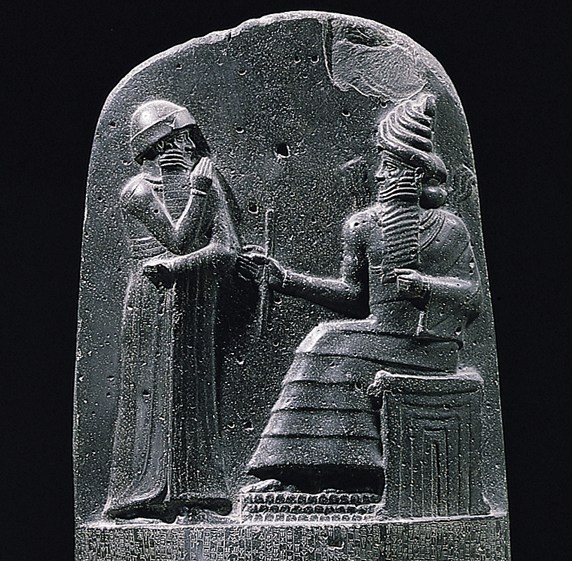
hammurabishamash2Atop the famous stele containing Hammurabi’s Code is a depiction of Hammurabi and Shamash, the Sun god, who was also the Babylonian god of justice.  The swirling headdress of Shamash in this image might seem merely decorative, but in fact it possesses a dynamic meaning.

At the back of Shamash’s neck is an oval object that has no obvious purpose.  It appears to be attached to the coiled shape of the headdress, as if it were the head of a serpent.  But why would Shamash be wearing a serpent on his head?

To answer this question, one must become aware of the compelling new evidence for and reinterpretation of

Tags: , , , , , , , ,

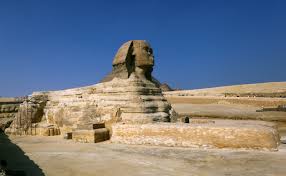
Among the deepest mysteries of ancient Egypt sphinxis the Great Sphinx of Giza.  Researchers, both professional and amateur, have painstakingly investigated its every aspect.1  Yet key puzzles remain, above all the question of why this colossal structure, the ancient world’s largest monument, was built in the first place.

It’s not that serious researchers and free-ranging speculators have not proposed explanations.  But every theory put forward falls well short of true persuasiveness or stumbles over inconvenient facts.  Here are three anomalies a correct theory should explain.

Tags: , , , , , , , , , , ,

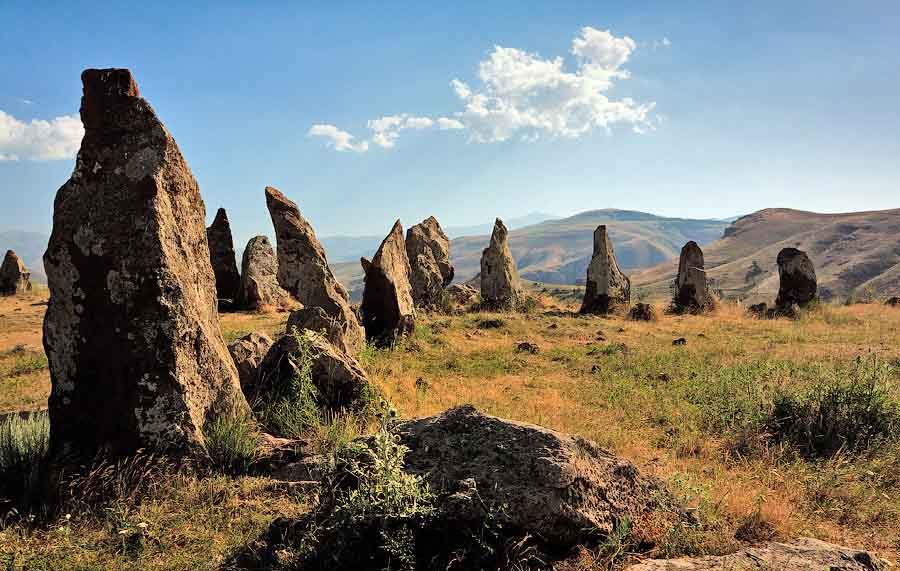
karahunj1Karahunj (Zorats Karer) is an ancient site in southern Armenia that contains more than 230 large stones, some 37 still standing, arranged in a fashion that has suggested to many observers that it was used for archaeoastronomy.  But defining how it was used has remained elusive.  Complicating the situation, Karahunj is located near a complex of ancient graves; we do not know who built it; it is difficult to ascertain exactly when the stones were set up; and some 85 of them have holes drilled through them that researchers have suggested might be used for sighting celestial objects, but other researchers think this unlikely because they would have been too imprecise.1

Nonetheless, there is a rather simple explanation of the stones of Karahunj.  But to grasp it, one must become aware of the compelling new evidence for and reinterpretation of

Tags: , , , , , , ,
Copyright © Scientia Press, 2026