
 [In a 2004 leak of a top secret Canadian Security Intelligence Service report, an al Qaeda detainee said that Abderraouf Jdey, a Canadian citizen of Tunisian origin, used a shoe bomb to cause the November 12, 2001 crash of American Airlines #587 from Kennedy Airport. Circumstantial evidence suggests that Jdey was also the mailer of the anthrax letters. See the analysis at the article Was Abderraouf Jdey The Anthrax Mailer?. The arguments below regarding the use of a Stinger-like missile and a northern New Jersey location of the Mailer are incorrect, but they are not being changed so that readers may follow the logic that led to the identification of Jdey as the likely Mailer. Information from October 2006 that the water used to prepare the anthrax was from the northeastern United States rules out a UK origin, as incorrectly argued below.]
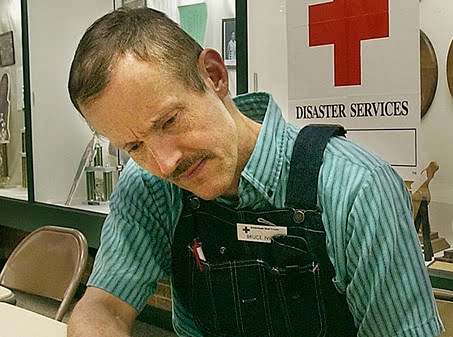
 The FBI investigation of the 2001 anthrax mailings may well have been the most extensive criminal investigation in world history. According to FBI, which closed its investigation on February 19, 2010, the Mailer was U.S. Government scientist Bruce Ivins, who committed suicide in July, 2008. But the evidence FBI has adduced is so weak that skepticism is widespread among scientists, other observers of the case, and the public at large.
Many observers find it impossible to believe that the Bureau could persuasively rule out the other hundreds of scientists who had access to the virulent strain of anthrax from the flask Ivins kept. Few doubt that the anthrax in at least some of the letters came originally from this flask, but critics charge that FBI has no valid reason to claim that Ivins was the one who prepared the anthrax and put it into the envelopes. FBI has also not addressed the possibility that someone stole the anthrax, even though researcher Ross Getman has identified several university labs and a bioscience company where al Qaeda sympathizers could have had access to anthrax originating in Ivins’s flask.
There’s a gaping hole in the FBI’s argument that U.S. Government scientist Bruce Ivins was the Anthrax Mailer.
In addition to the hundreds of scientists with access to virulent anthrax from Ivins’s flask whom the FBI claims to have ruled out, one unauthorized individual had a special kind of access–the kind you get when you steal something. Hovering in proximity to an unlocked refrigerator with the anthrax at George Mason University was Islamic ideologue Ali al-Timimi, who in early 2001 was studying for a Ph.D in computational biology. Al-Timimi has since been arrested and sentenced for inciting Muslims in Virginia to travel to Pakistan to fight against U.S. forces.

On November 12, 2001 American Airlines Flight #587 crashed in Queens, New York shortly after take off, killing 265. Some observers were quick to suggest that al Qaeda terrorists had brought the aircraft down. But the October 26, 2004 official report by the National Transportation Safety Board blamed the crash on the co-pilot, who jerked the rudder back and forth in an effort to correct for turbulence from a preceding jet.
The crash was soon eclipsed by the repercussions of the 9/11 terrorist attacks, the anthrax mailings, and the war in Afghanistan. Yet suspicions lingered. Many eyewitness accounts, for instance, seemed consistent with an on-board explosion, yet the report brushed them aside as contradicting each other and generally unreliable.
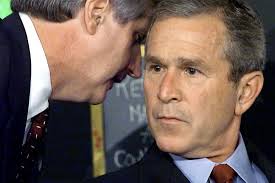
Anomalous Mistake-driven Opportunity Creation (AMOC) occurs when a government official charged with a certain problem commits an extraordinary error—one so inconceivable that no one can imagine that he/she has perpetrated it. And therefore the official gets away with it.

The European Economy, 1500-1650
I. Framework
- climate: warm to 1600; Little Ice Age, 1600-1850
- population: 1500: 80 million; 1600: 115 million, then stagnation
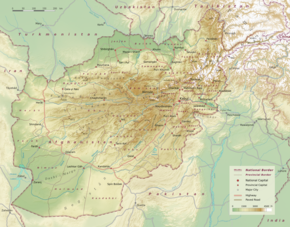 [August 16, 2021: The U.S./NATO withdrawal and Taliban takeover of Afghanistan have put an end to this issue, though it remains of historical interest.]
[January 31, 2018: This article was published in 2008. While some of the details have been overtaken by events, the main thrust of the argument has changed little. Keeping troops in Afghanistan for 16 years by now, with no end in sight, seems so palpably contrary to American interests that we must ask whether the U.S. Government has an unstated motive. By far the most plausible such motive is that the Israel Lobby wants us to keep our troops in Afghanistan to put pressure on Iran and to provide bases in the event of a war against Iran. In turn, the power of the Israel Lobby and the consequent possibility of war against Iran motivate the U.S. military to seek to remain. The cost of the war has climbed well beyond $1 trillion. Thousands of American soldiers have been needlessly killed, and thousands more maimed.]
[2008] According to media reports, American commanders in Afghanistan are asking for 5-10,000 troops above the 4,000 approved for deployment and the 10,500-12,000 already requested–for a total of up to 26,000. 32,000 are currently in Afghanistan. Overshadowed by the elections and global financial crisis, this proposed major escalation is moving ahead with little debate. And it is not a temporary ”surge”; the generals are seeking these new troop levels for the duration of the war, however many years that may involve.
Before we make this move, a weighing of pros and cons would appear to be in order.
[December, 2008] No matter how deeply he or she gazes into a crystal ball, the world’s most far-sighted economic guru would not find it easy to predict the long-term outcome of the current Global Financial Crisis (GFC). So it might seem a bit premature to start drawing inferences from the collapse of renowned financial firms, market gyrations, and massive government interventions, especially if these inferences relate to the Global War on Terrorism (GWOT). Nonetheless, there is a compelling reason to endeavor to do so: correctly assessing the impact of the GFC and its economic consequences on how the War can or should be fought may save us from making serious errors. Considering how many serious errors have already been committed in both the GWOT and the GFC, this seems highly desirable.
 Knowing how to read documents in a sensitive and analytical manner is a skill that has wide application in career and personal situations. Techniques for evaluating documents can also be used to interpret objects of material culture and art. Here are 20 questions that can help us analyze documents. While they can be applied systematically, asking them randomly in brainstorming fashion may lead to even more rewarding outcomes.
- What kind of document is this?
- When and where was it written? What were the circumstances?
- Who is the author, or what can we infer about an anonymous author?
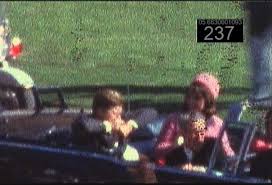 Unfinished business in a nation’s history can undermine citizens’ trust in government and sense of participating in a meaningful collective life.
In the case of fatal moments such as assassinations and terrorist attacks, the damage adds to the impact of the attacks and helps the attackers achieve their goals of demoralizing the people and fraying the social fabric. Compounding the problem, government agencies and the media often show reluctance to reveal what they learn because they lack 100% assurance of its validity, because they fear the public reaction, or because they are covering up their own mistakes. As a result, people often believe that certain crimes remain unsolved or are even unsolvable when in fact they have already been solved but the information is being denied to the public.