
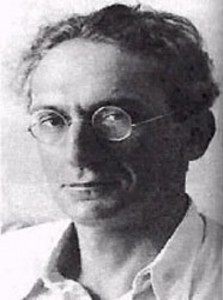
 In his book Worlds in Collision (1950), MD and psychoanalyst Immanuel Velikovsky argued that Venus had emerged as a comet from Jupiter, then approached Earth during the Bronze Age, causing catastrophes that appeared in the Bible and other ancient narratives and myths as well as leaving evidence in iconography, geology, archaeology, linguistics, and calendrics. Many scientists vehemently rejected his claims. Although Velikovsky attracted a sizeable following, he was shut out of scientific journals and became the single most vilified scientist of all time. After his death in 1979, the controversy–the greatest in planetary science since Copernicus and Galileo–faded into the background. But gradually researchers accumulated an array of new evidence supporting his case.
Now chatbot Claude Haiku has revisited the controversy and asked whether it shows signs of scientific rejectionism. After general discussion in points #1-10, in #11-20 human intelligence and AI collaborate on an evidence-grounded interdisciplinary solution–a Revised Venus Theory.