
Rosemarie, A Novel of Discovery Science
As she struggles with a rare disease at the American Embassy in Turkey, philosopher Rosemarie devises a theory of the red blood cells. Acting as a metacolony in real time, they constitute the Original Intelligence of humankind’s pre-neuronal ancestors and possess remarkable properties. Peculiar dreams lead Rosemarie to other theories. They also warn of terrorist attacks. Her diplomat husband is wounded fighting off jihadists. The ambassador is smitten by her charms. A CIA psychiatrist stigmatizes her with a fraudulent diagnosis. Entranced by a Turkish folktale, Rosemarie befriends a handsome young Turk….
Readers say:
“Excitement and intellectual depth.”
“The ending was very satisfying.”
“[I]t’s a good read and I recommend it.” (Goodreads)
Goodreads rating: 4.5 stars
See the author’s biosketch at About Us.
Tags: Biophotonic Therapy, cellular basis of consciousness, discovery science, Dreams, magnetoreceptor, Martian Theory of Mass Extinctions, Outer Solar System Origin of the Terrestrial Planets, philosophical counseling, psychic, Psychology, scientific theory, terrorism, Theory of the Red Blood Cells, ultrasensitive psi receptor, Velikovsky
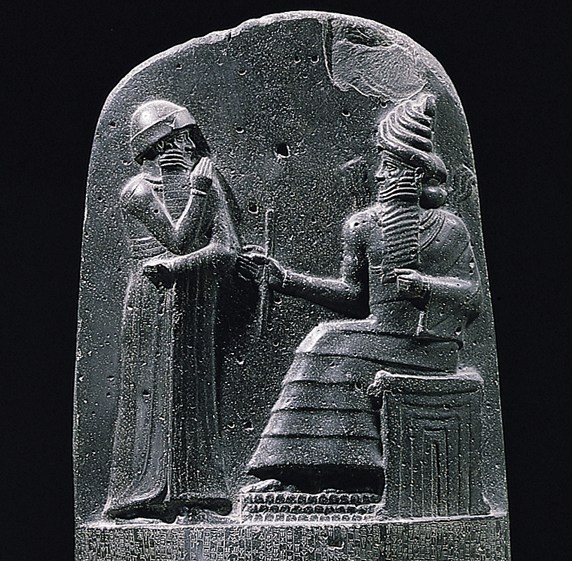
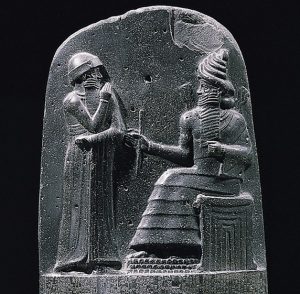 Atop the famous stele containing Hammurabi’s Code is a depiction of Hammurabi and Shamash, the Sun god, who was also the Babylonian god of justice. The swirling headdress of Shamash in this image might seem merely decorative, but in fact it possesses a dynamic meaning.
At the back of Shamash’s neck is an oval object that has no obvious purpose. It appears to be attached to the coiled shape of the headdress, as if it were the head of a serpent. But why would Shamash be wearing a serpent on his head?
To answer this question, one must become aware of the compelling new evidence for and reinterpretation of
Tags: Babylonia, Bronze Age catastrophes, Hammurabi, Inanna, Ishtar, Khafajeh, Shamash, Velikovsky, venus
Among the deepest mysteries of ancient Egypt 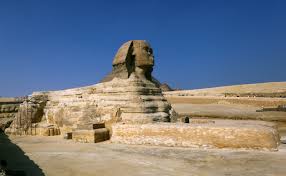 is the Great Sphinx of Giza. Researchers, both professional and amateur, have painstakingly investigated its every aspect. Yet key puzzles remain, above all the question of why this colossal structure, the ancient world’s largest monument, was built in the first place.
It’s not that serious researchers and free-ranging speculators have not proposed explanations. But every theory put forward falls well short of true persuasiveness or stumbles over inconvenient facts. Here are three anomalies a correct theory should explain.
Tags: Ancient Egypt, Bronze Age catastrophes, Giza, Great Sphinx, Khafre, myth, pyramids, Re Horakhty, Sekhmet, Sphinx, Velikovsky, venus
 Karahunj (Zorats Karer) is an ancient site in southern Armenia that contains more than 230 large stones, some 37 still standing, arranged in a fashion that has suggested to many observers that it was used for archaeoastronomy. But defining how it was used has remained elusive. Complicating the situation, Karahunj is located near a complex of ancient graves; we do not know who built it; it is difficult to ascertain exactly when the stones were set up; and some 85 of them have holes drilled through them that researchers have suggested might be used for sighting celestial objects, but other researchers think this unlikely because they would have been too imprecise.
Nonetheless, there is a rather simple explanation of the stones of Karahunj. But to grasp it, one must become aware of the compelling new evidence for and reinterpretation of
Tags: ancient history, archaeoastronomy, Armenia, Great Serpent Mound, Karahunj, Taosi, Velikovsky, venus
 New evidence and interpretation at the intersection of planetary science and religion can help us better understand the history of the Ancient Near East and of the origins of Islam.
A Revised Venus Theory corrects Immanuel Velikovsky’s original theory that the planet Venus first entered the inner solar system as a comet with a bifurcated tail around 1500 BC (new evidence indicates around 2525 BC). Now we have a much better explanation of the origin of Venus (rather than fissioning off of Jupiter, it was pulled from the outer solar system by Jupiter’s gravity and, via tidal heating, became a comet with a long tail). Venus interacted with the Earth on a 52-year cycle during the Late Bronze Age, causing catastrophes worldwide. And we now have a framework theory of the terrestrial planets into which these phenomena neatly fit and for which there is telling evidence. For Comet Venus, there is also newly interpreted, compelling iconographic and linguistic evidence. The names of both Athena (A Fena, the Phoenician) and Poseidon (Bos eidon, the Bull of Heaven), for instance, referred to the double-tailed Venus.
So with new-found confidence that the Ancients and Velikovsky were right about Venus, we can ask how can we use this to decipher aspects of the culture of the Ancient Near East and of the background of Islam.
Tags: Ancient Near East, Ashur, Astarte, Ishtar, Islam, Kaaba, Mohammed, planetary science, Velikovsky, venus
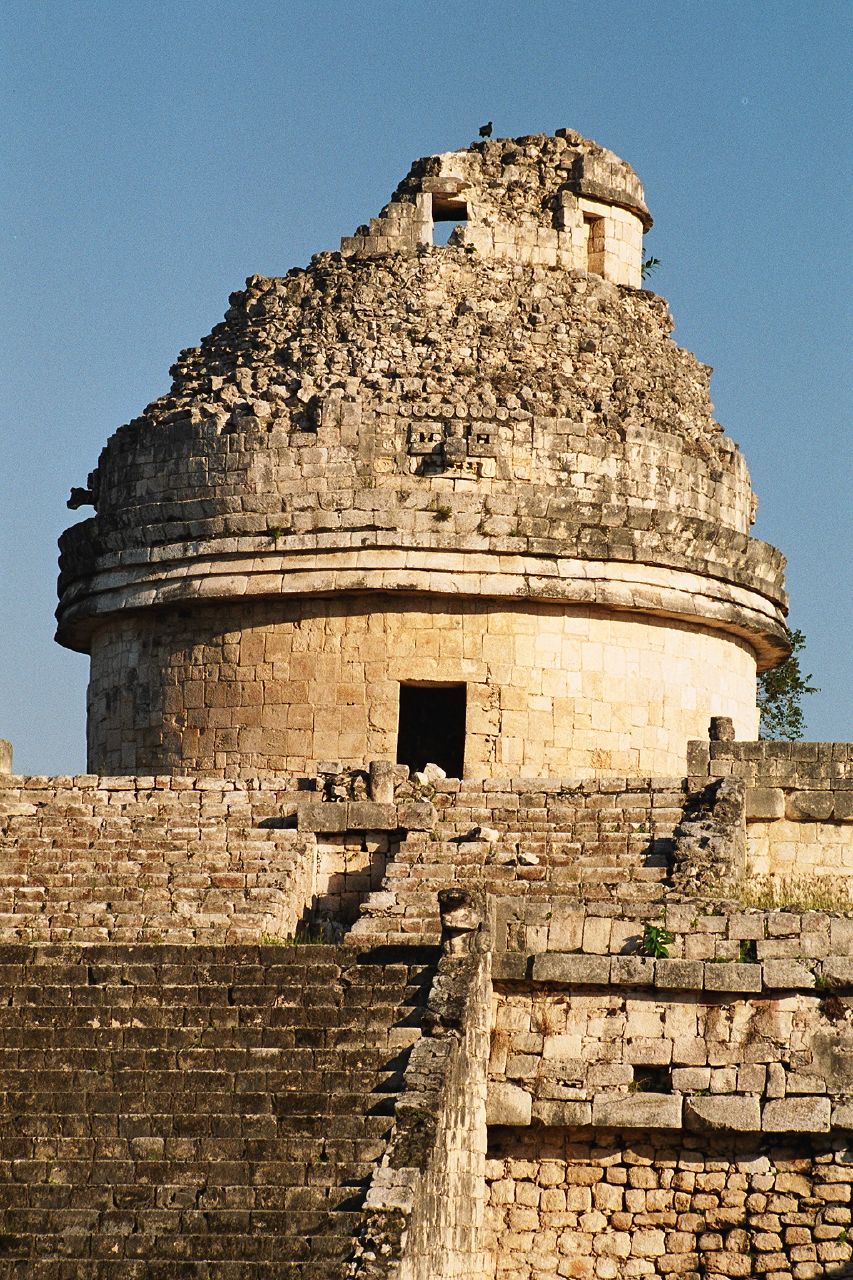
 The civilizations of Mesoamerica abounded in mysteries. What caused their fixation on Venus? What led them to develop their intricate, highly precise calendars? What can explain the little pecked-cross circles embedded in the landscape? Why were these peoples so keenly bent on human sacrifice? What were the Aztecs referring to when they said that this was the age of the Fifth Sun?
We have a skeleton key that can unlock these old secrets.
Tags: archaeoastronomy, Aztec, ball game, catastrophes, inversion of Earth, Mars, Maya, Mesoamerica, Olmec, pecked-cross circles, synodical year, Teotihuacan, Toltec, Velikovsky, venus
Historia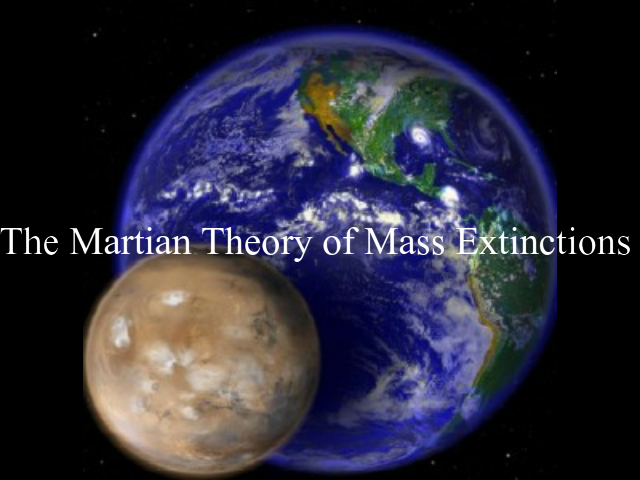 n and scientific researcher Kenneth J. Dillon explains his The Martian Theory of Mass Extinctions. For most of the past 4 billion years, the orbits of Mars and Earth were more eccentric than at present, and they intersected. The closest approaches of Mars led to the great mass extinctions of prehistory, while more distant approaches might account for many minor extinctions as well. The theory shows why the extinctions were serial events, why they differed in size, how they shaped the surface of Mars, and what made them so terrifically devastating. For further information, see https://www.scientiapress.com/extinctions.
The Martian Theory of Mass Extinctions
Tags: Bronze Age catastrophes, Chicxulub, Cretaceous-Paleogene, Deccan Traps, Elysium Mons, inner solar system, Mars, mass extinctions, mass wasting, Olympus Mons, Tharsis, tidal locking, Velikovsky, venus


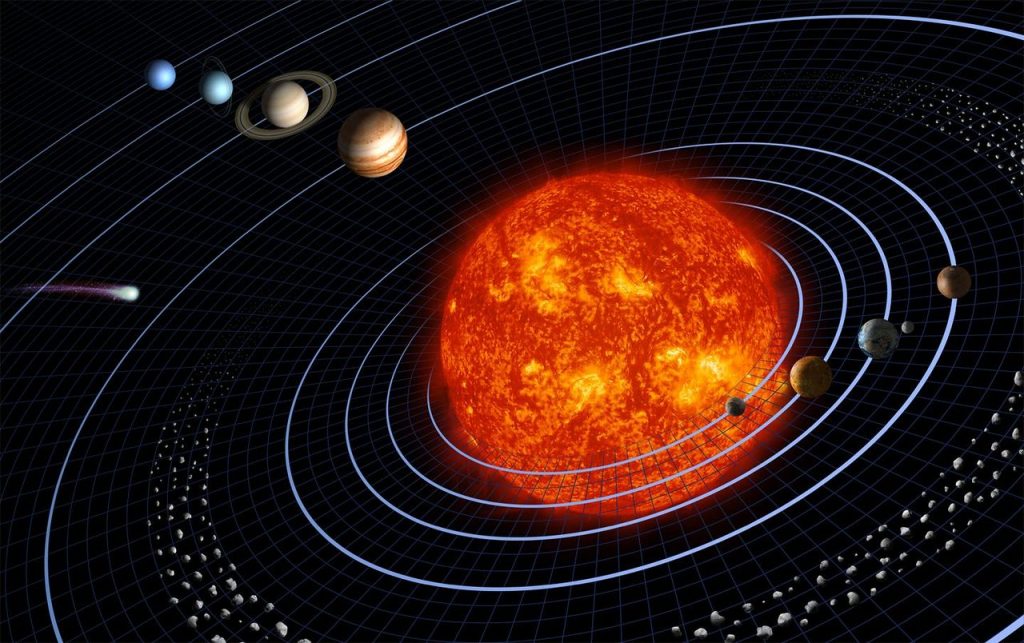 A new theory of the origin of the terrestrial planets—that Jupiter’s gravity pulled them inward from the outer solar system—solves longstanding scientific riddles and offers a rich agenda for further investigation.