
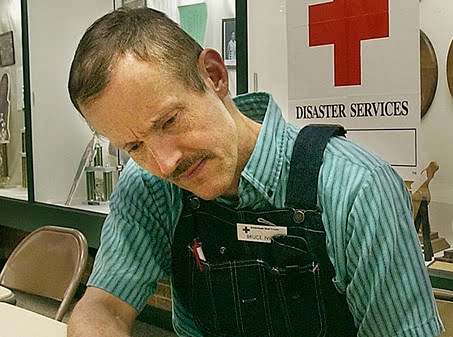
 There are two sides to every story. Judges rightly admonish juries to check out both sides before coming to a conclusion. Our entire system of adversarial justice is built on this principle. But under surveillance by FBI in the 2001 anthrax mailings case, U.S. Army scientist Bruce Ivins committed suicide. So only one side got to tell its version of the story.
Upon closing the case on February 19, 2010, FBI issued an Amerithrax Investigative Summary that concludes that Ivins was the anthrax mailer. The Summary contains serious errors as well as minor ones. It also omits crucial information. So, to ensure a fair outcome, we need to look at it through the eyes of a defense attorney, to make sure that the American people can check out both sides of the story before coming to a conclusion.
First, let’s take a critical look at the arguments FBI makes. Then we can turn to the omissions.
Seven Flaws
There are seven main flaws in the Summary’s arguments:
1. FBI claims that it has direct evidence that Ivins mailed the letters, not just circumstantial evidence. But its direct evidence turns out to be that Ivins was the custodian of the purported source of the anthrax used, flask RMR-1029. That is in a sense direct evidence, but since the Bureau itself admits that the anthrax used in the case could have come from any of the hundreds of scientists who had access to samples from RMR-1029, it is not exclusive evidence. Yet in its common meaning, “direct” evidence is tied exclusively to the accused individual, so ostensibly direct evidence such as the RMR-1029 flask actually becomes a kind of circumstantial evidence in reference to Ivins or any other scientist who prepared the anthrax. Characterizing the evidence as entirely circumstantial seems a good deal more accurate than FBI’s misleading characterization, and it provides a powerful reason for skepticism about FBI’s entire case. There’s not a shred of direct evidence that can be pinned on Ivins and on nobody else. Besides, analysis of the anthrax in the letters suggests that it was not derived from RMR-1029 but was rather a cousin of it that came from somewhere else than USAMRIID. If Ivins worked with it, he presumably had been given access to it to carry out a special project.
2. One of FBI’s key arguments is that Ivins spent extra hours at night in the “hot suites” at USAMRIID, Fort Detrick preparing the anthrax just before the mailings of September and October, 2001. But his calendar and related documentation show that he had scheduled duty to check on a test of an anthrax vaccine on scores and perhaps hundreds of animals on those nights.1
3. FBI argues that Ivins had the equipment and skills to prepare the anthrax in the letters to the senators. Critics have voiced objections, including that USAMRIID did not possess the proper equipment and that preparing powdered spores would have required far too much time. At a minimum, preparing the anthrax and then cleaning the equipment would clearly have required a good deal of time and effort—hard to hide from co-workers. However, there are good reasons to believe that in fact Ivins did prepare the anthrax; but he did so a year or two earlier for a Department of Defense project to provide realistically enhanced variants in order to test vaccines. Moreover, he didn’t do it at USAMRIID but rather at another Biosafety Level 3 laboratory in Frederick—and he did not mail the anthrax letters. See Was Abderraouf Jdey the Anthrax Mailer?
4. While Ivins had many long-standing quirks and obsessions, he plainly deteriorated in the last year of his life under FBI pressure and excessive intake of alcohol and medications. FBI’s effort to use evidence of pathological tendencies from this period to portray his earlier state of mind and behavior seems very unpersuasive. Moreover, a key witness who provided lurid testimony regarding Ivins during his last year was his addictions counselor, Jean Duley. Duley, who described herself as a former motorcycle gang member and hard drug user, had repeated arrests for DUI.2 Likewise, Ivins’s counselor, Judith McLean, who reported his plan in 2000 to poison his former lab technician if she lost her soccer match, is the author of a book in which she vaunts her psychic powers, discusses her out-of-body experiences, and communicates with a megalithic French stone. Duley’s and McLean’s accounts of Ivins may or may not be accurate, but they hardly rate as credible witnesses; both might well have put a spin on their reports. In addition, the March 23, 2011 report on Ivins by psychiatrists and others misinterpreted his psychological profile. (They claimed to be independent, but in fact the director of the panel, Gregory Saathoff, had consulted in the investigation at a critical junction.) A lifelong, energetic emitter of ideations of violence, Ivins never once caused physical harm to another person. Scores or even hundreds of ideations; zero acts. This extreme disproportion suggests that Ivins had a powerful inhibition against doing physical harm to others, presumably derived from observing as a child his mother’s assaults on his father. Thus to send virulent anthrax by mail would have violated a major taboo. It would have been totally out of character. He was psychologically incapable of doing physical harm to any other person. Indeed, when he was trapped, desperate, and angry at the end, he went and told his ideations of violent revenge against perceived enemies to his whole therapy group so that somebody would be very likely to stop him. See Psychiatrists Misinterpret Bruce Ivins.
5. FBI’s claim that the language of the letters resembled that of Ivins could apply to hundreds of other possible writers of the letters. Its effort to find evidence in them of use of a hidden genetic code by Ivins seems fanciful, is certainly unproven, and is lacking in probative value. A person interviewed by FBI about the writing in the letters stated “the more you look the more unclear it is.”3
6. FBI repeatedly assumes that the preparer and the mailer of the anthrax were the same person, but there is telling evidence (see below) that they were not.
7. The statements and actions of Ivins that FBI claims were signs of a guilty conscience can just as readily be interpreted as evidence of an innocent man’s well-founded fear that, if FBI found evidence that he had prepared the anthrax powder, it would never believe that he had not mailed it because of his lurid psychiatric history. His entire pattern of behavior fits perfectly the pattern of someone who prepared the anthrax but did not mail it.
The Missing Pieces
While the seven flaws in the arguments already include important omissions (e.g., of Ivins’s scheduled duty to check the animal experiment), the critical issues that are not dealt with in the Summary are arguably at least as important as the flawed arguments it contains. Let’s start with the lesser omissions and move up to the greater ones.
1. Ivins was a much more many-sided, social, and in this sense normal person than FBI’s Summary would lead one to believe. He played the piano in church, played and sang in a Celtic band, composed songs for departing colleagues, was an expert juggler who taught kids how to juggle, and was involved in a number of groups such as Red Cross. He was married and was the father of two adopted children. He had relationships with dozens of co-workers, ranging from professional to quasi-intimate. So in spite of the quirks and obsessions that FBI dwells on, Ivins was clearly an active contributor to his community in addition to being a hard-working, productive scientist. As noted above, the psychiatrists–some FBI consultants–who compiled the 2011 psychiatrists’ report on Ivins suffer from a delusion that they are independent of FBI, and they get the crucial psychology of the alleged anthrax mailer completely wrong.
2. Even in regard to Ivins’s quirks and obsessions, FBI withholds a full accounting from the public on the grounds that they are not relevant to the anthrax mailings. Did deviations from normality include some that were highly embarrassing to Ivins, ones that he would have hated to become public knowledge in the course of a trial? Would they explain his fears of being (incorrectly) targeted as the anthrax mailer or his suicide? Could he have been eager to protect the identity of any partners? Ivins was patently open to blackmail. So he might indeed have felt guilty about something else that FBI does or does not know about.
3. Omitted from FBI’s Summary are Ivins’s lab notebooks, paper and computer files, and information about meetings, phone conversations, and other work he was doing in September and October, 2001. These sources may well contain details on animal experiments and other activities that undermine FBI’s case. In particular, FBI has withheld Ivins’s email messages on September 17, the date on which he was supposed to have mailed the first letters in Trenton, New Jersey. One must wonder whether the time the messages were sent would make it difficult or impossible to drive to Trenton. The rationale of withholding sensitive content does not apply because that can all be redacted, leaving just the time. In addition, FBI has withheld Ivins’s handwritten notes in his notebooks on his nights in the lab, which could provide telling evidence undermining its case. FBI also has never released traditional forensic evidence such as on the photocopiers Ivins had access to.
4. The February 15, 2011 National Academy of Sciences report on the scientific aspects of the case left many questions unanswered. The NAS chose not to review classified information, in part because FBI refused to provide information to the committee on key subjects. NAS did not cover all the investigative aspects of the scientific evidence. For instance, FBI has not identified at Fort Detrick the Bacillus subtilis strain contaminant found in the earlier letters, suggesting that the anthrax was prepared elsewhere. More generally, the lax laboratory and computer security in regard to anthrax at laboratories other than Fort Detrick in the pre-September 11, 2001 era needs much more examination. FBI’s failure to address these and other investigative questions that relate to the scientific aspects of the case represent significant omissions.
5. Lastly and most importantly, the Summary dismisses al Qaeda in a few sentences. That is clearly unacceptable. A chain of evidence and logic suggests that al Qaeda stole the anthrax and mailed the letters. The American people deserve a much fuller accounting. Many observers incorrectly ruled out an al Qaeda Mailer based on fallacious arguments. See The Anthrax Mailings Can’t Have Been al Qaeda.
Summing Up
Now that we have heard the other side of the story, the case looks quite different from what FBI claims it to be. However, we should not rule out the possibility that DoD and its contractors concealed highly relevant information about the case from the FBI investigators, allowing them to pursue an erroneous theory of the case. At any rate, given FBI’s flawed arguments and omissions of critical information, its Summary should not persuade anyone interested in getting to the bottom of the anthrax mailings case. Something is very wrong here.4
On April 2, 2015 Richard Lambert, who headed FBI’s anthrax investigation from 2002 to 2006, filed suit in the US District Court for Eastern Tennessee against Attorney General Eric Holder et al. for retaliating against him for his whistle blowing 2006 internal report. In Paragraph 53, he cites, among other things, “(j) the FBI’s fingering of Bruce Ivins as the anthrax mailer; and, (k) the FBI’s subsequent efforts to railroad the prosecution of Ivins in the face of daunting exculpatory evidence. Following the announcement of its circumstantial case against Ivins, Defendants DOJ and FBI crafted an elaborate perception management campaign to bolster their assertion of Ivins’ guilt. These efforts included press conferences and highly selective evidentiary presentations which were replete with material omissions.”
In paragraph 55 Lambert referred to “a wealth of exculpatory evidence”. That evidence seems likely to be in the 16-page Ivins chapter (plus exhibits) of the 2006 Interim Major Case Summary written by Lambert. On March 16, 2020, the court ruled in the FOIA lawsuit Dillon v. U.S. Department of Justice that FBI may withhold from public scrutiny the 16 pages on Ivins. To date, the U.S. media have not reported this, nor has Congress looked into it.
The best full account of the case is Was Abderrauf Jdey the Anthrax Mailer?
*****
Kenneth J. Dillon is an historian and former State Department intelligence analyst who writes on science, medicine, and history. See the biosketch at About Us. For essays on ancient and modern history, see his The Knowable Past (2nd edition, Washington, D.C.: Scientia Press, 2019).