
 New evidence and analysis suggest that the KGB was behind the 1963 assassination of President John F. Kennedy.New evidence and analysis suggest that the KGB was behind the 1963 assassination of President John F. Kennedy.

 There are good reasons to think that the KGB arranged the murders of John F. Kennedy, Martin Luther King, and Robert F. Kennedy, as well as of other Americans. Note: “good reasons”, not definitive proof. In each case, I will argue that We must consider the KGB the leading suspect (in the JFK assassination, a KGB rogue and the Mafia collaborated while the KGB acted as a ghost partner). This perception can guide further investigation that can result in the more definitive finding that the KGB arranged these and related murders.
First, I will explain how the KGB and Mafia have emerged as the prime suspects in the JFK assassination. Not only was this the most important and best-known case. New evidence and interpretation point to the KGB’s role in particular and have implications for the other murders. Second, I will treat each of ten likely KGB murders in summary fashion. Third, I will touch on factors that have hampered resolution of these cases for many decades. Fourth, comparing the cases, I will identify characteristics of the KGB’s art of deniable murder. Fifth, I will draw some conclusions.
*****
1. The KGB and JFK
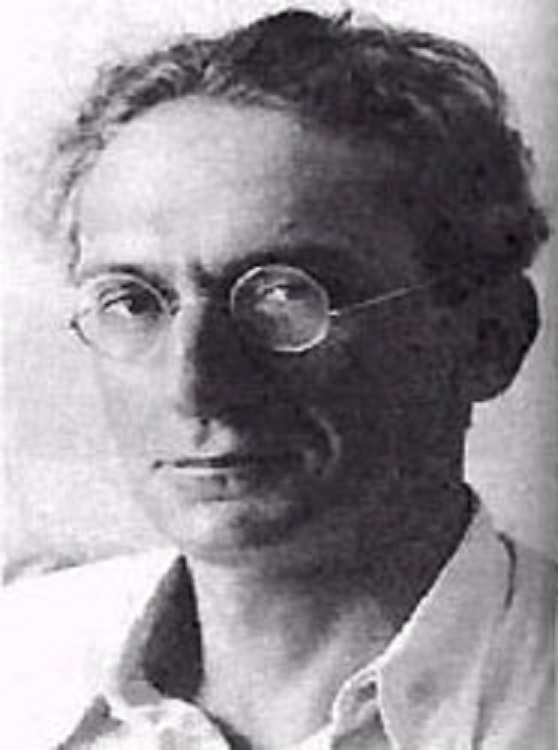 Based on his interpretation of ancient sources, Immanuel Velikovsky argued famously that Venus had emerged from Jupiter as a comet; interacted with the Earth and Mars in the second and first millennia BC, causing the Bronze Age catastrophes; and then finally settled into a nearly circular orbit of the Sun.
Three lines of reasoning support a Revised Venus Theory.
First, instead of the various unpersuasive suggestions that Velikovsky and others have made for how a cometary Venus could have emerged from Jupiter, we should consider the possible consequences of the immense gravitational field of Jupiter, which pulls toward it a stream of asteroids and comets, as with Shoemaker-Levy 9 in 1994.

The Outer Solar System Origin of the Terrestrial Planets (OSSO) states that Jupiter’s gravity pulled them inward from the outer solar system. First, I will discuss the origins of Venus, the Moon, Mercury, Earth, and Mars. Then I will offer a new Capture Theory of the origin of the Earth-Moon system. Lastly, I will explain telltale anomalies of the terrestrial planets.
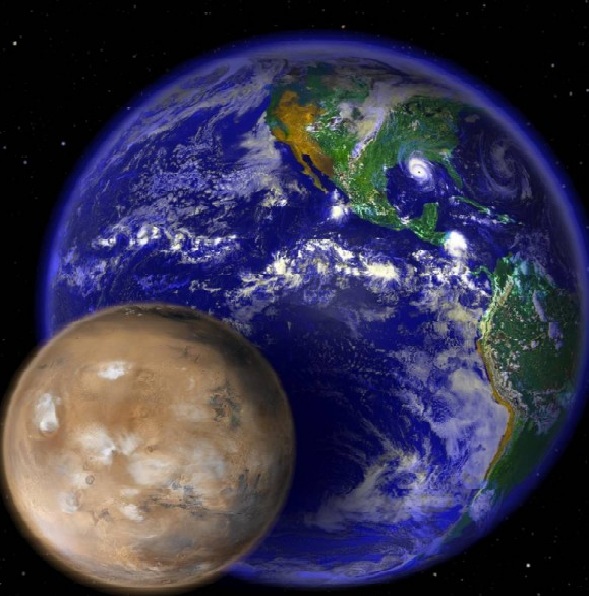 There’s no shortage of candidates for the cause of the mass extinctions of prehistory. But experts have found flaws in every one.
Asteroid impact at Chicxulub, Yucatan clearly played a role in the Cretaceous-Paleogene (K-Pg) extinction that wiped out the non-flying dinosaurs 66,000,000 years ago, though scientists point to the serious disruptions that had begun hundreds of thousands of years before with the basalt flows of the Deccan Traps.1 Giant basalt lava flows that poisoned the atmosphere and oceans played a role in four or perhaps all five major extinctions. But other enormous basalt flows have not caused extinctions, nor did they cause the tsunamis associated with various extinctions.2 Researchers have suggested many other mechanisms, but there’s no consensus at all.
Lurking in the background, however, is a quite plausible cause, one that would have possessed the power to set off the volcanic activity, air pollution, mass wasting, sea level shifts, loss of oxygen in oceans, climate changes, and other phenomena associated with the extinctions.
The Martian Theory
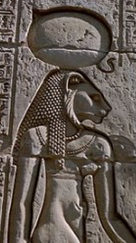 Sekhmet (“The Mighty One”), lioness goddess of ancient Egypt, spread terror with her bloody rampages. Yet she became the protector of kings and a favorite personal goddess of millions of Egyptians.
Why did Egyptians have a goddess who required such assiduous and even obsessive propitiation? Why did other Egyptian goddesses play roles similar to Sekhmet’s? What explains Sekhmet’s dual nature as destroyer and protector? Why did Egyptians call her the Eye of Ra? Why did she originally appear with an oval disk on her head?
We now have good answers to these questions. But in order to understand them, we need to see why we should think that Sekhmet was Planet Venus. And that requires us to investigate a major case of scientific rejectionism.
 There are good reasons to think that Earth has turned over on various occasions. But who can be surprised that this perception—so removed from everyday experience—seems less than instantaneously persuasive?
The good reasons include telling evidence in narrative testimony and correctly interpreted myths of the ancients, embedded patterns in ancient cultures that give evidence of inversions, and the insights and arguments of two formidable researchers. Now we can: add new reasons that strengthen the case; specify the very approximate dates of four inversions; extend the theory to the five great mass extinctions of prehistory; comprehend that Earth is actually prone to inversion; and point to where to find more evidence. Understanding inversions helps us correct errors in interpreting past planetary and Earth science while providing clues relevant to climate change.
 The Science of Medicinal Bracelets
The vision inspiring the study of medicinal bracelets is of an attractive, simple, easy-to-use, safe, naturally effective kind of medicine. Investigation of medicinal bracelets can also reveal fascinating deeper patterns of the body.
 Once a leading theory of the origin of the Earth-Moon system, the Capture Theory is simple and intuitively plausible. The numerous instances of moons with retrograde orbits show that capture is fairly common. The lunar orbit’s three moments of inertia are consistent with a past very eccentric orbit, suggestive of capture1. However, the Moon would, it was thought, have to come from a different part of the solar system to account for its very depleted iron compared to the Earth’s iron, which means that it would approach the Earth at a high velocity that would prevent capture. Researchers have searched in vain for a braking mechanism that would slow it down so it could be captured. Still, the accumulated evidence and arguments make the Capture Theory a viable one.
But
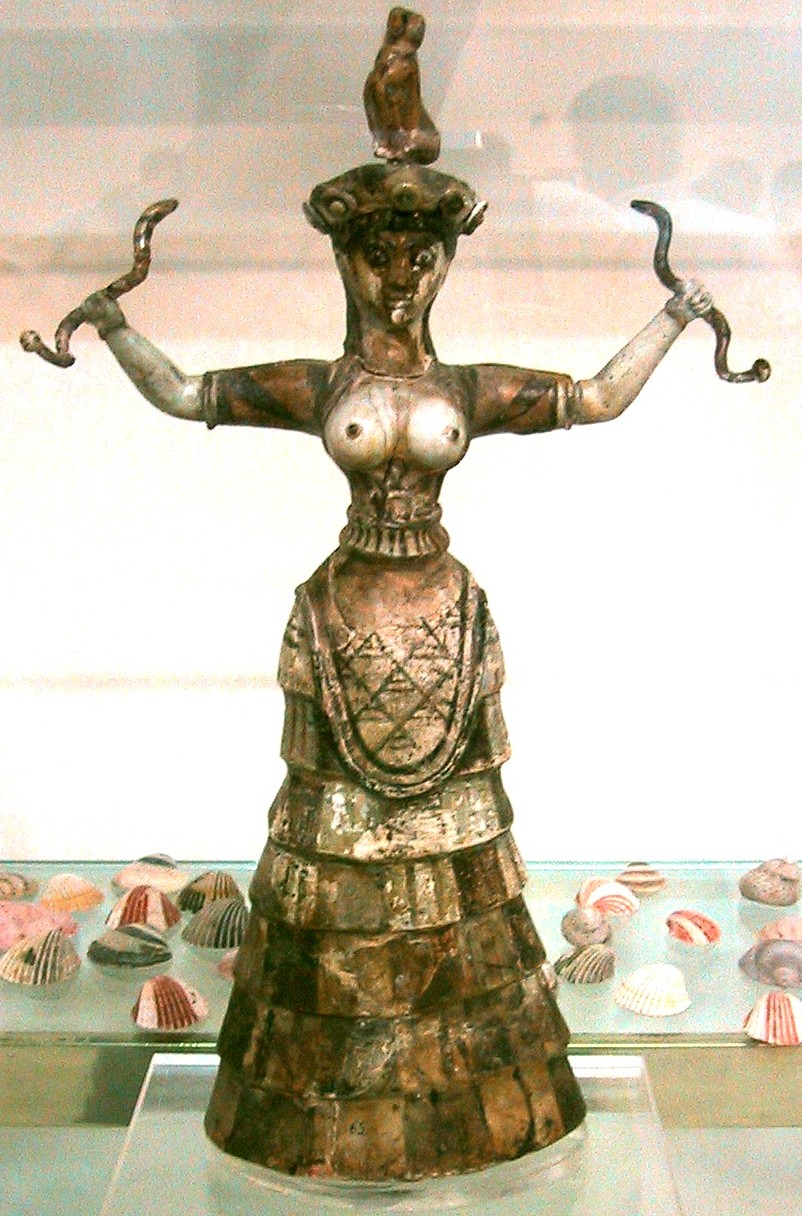 The famous Snake Goddess of ancient Crete has long attracted students of history and art. Elegant, risquée, enigmatic, she embodies the mystery and allure of Minoan civilization.
When Venus first appeared in the skies around 2525 BC, ancient peoples worldwide strove to come to terms with this brilliant and awesome new comet-planet (the best account is in Immanuel Velikovsky, Worlds in Collision, though it has been corrected in a Revised Venus Theory). That meant assigning the deity a gender and a name.
In the Near East, they tried both genders. In its masculine incarnation, Venus became the Bull of Heaven (as Velikovsky pointed out, the comet-planet’s body blocked the sun’s rays from the central portion of its tail and thus it was seen as having two horns). In its feminine version, Venus was called Ishtar or Astarte; and in the Levant Astarte was depicted with serpents in her hands—the twin tails of the comet.
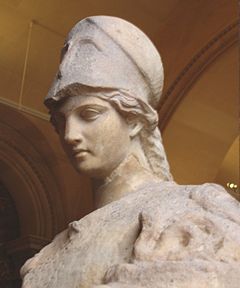
In Greece, according to Velikovsky, planet Venus was originally named Athena.
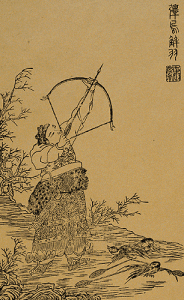 If we can interpret certain ancient myths correctly, they could lead us to more accurate and penetrating views of the history of the Earth and the solar system. They might teach us about the forces at work and explain anomalies bequeathed to us by a long-hidden past. But how can we interpret these myths, the products of minds so far removed from ours? How do we know which interpretation is correct, if any? Are we doomed to speculate without ever achieving certainty?
Here we will interpret two Bronze Age myths to illustrate the high scientific value such myths might contain. We will also see how easy it can be to understand a myth once the right interpretation becomes available.