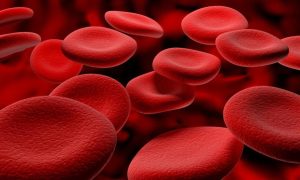
Acting in a coherent fashion, the red blood cells play a much more important role in life processes than is commonly known.
The red blood cells’ unique, remarkable role in oxygen and carbon dioxide transport sharply distinguishes them from the body’s other cells. So do their anaerobic energy metabolism, peculiar biconcave shape, 120-day life cycle (with 2,000,000 new RBCs formed every second), iron content, and extremely high hemoglobin content (roughly 270 million hemoglobin molecules are packed into each one of 25 trillion RBCs). While their counterparts in many vertebrates and invertebrates retain the nuclei and organelles that mammalian RBCs eject in the course of maturation, the erythrocyte group in general exhibits certain “prokaryotoid” characteristics,
Tags: astrocyte, biophotonics, consciousness, dermal optics, erythrocyte, magnetoreceptor, neuroscience, psi receptor, red blood cell
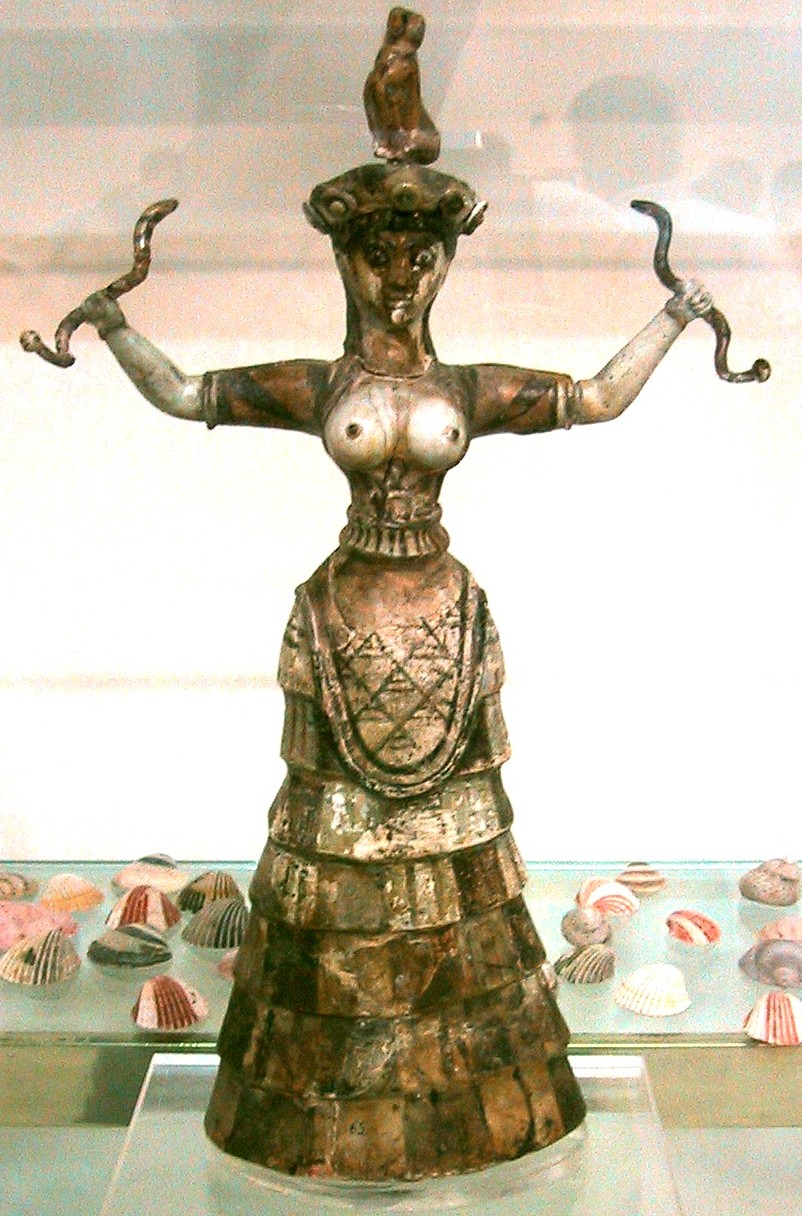
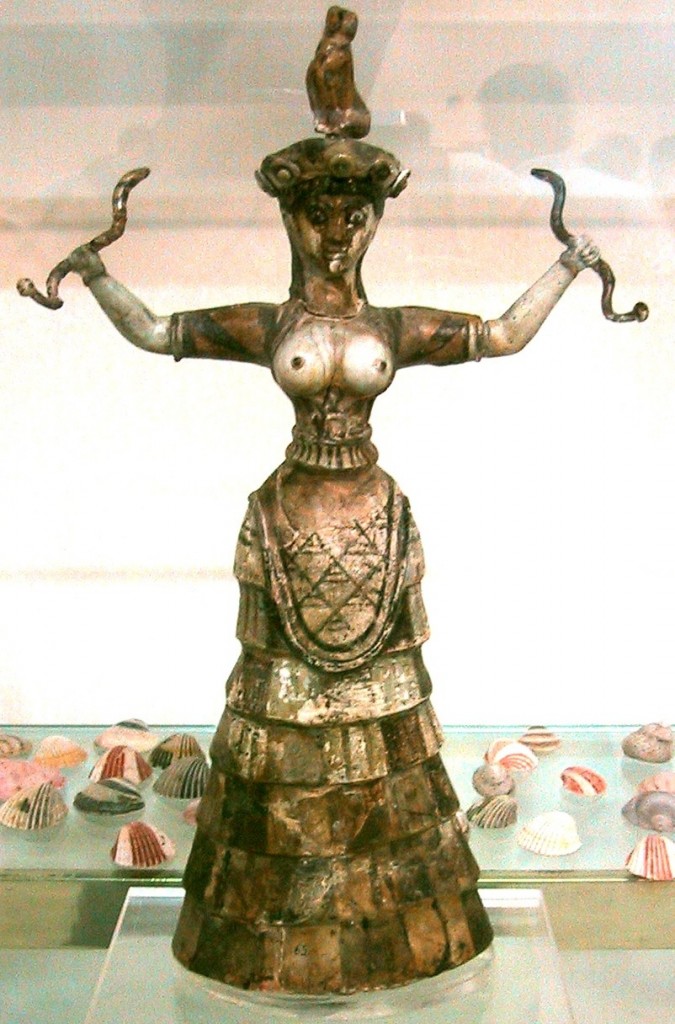 The famous Snake Goddess of ancient Crete has long attracted students of history and art. Elegant, risquée, enigmatic, she embodies the mystery and allure of Minoan civilization.
Tags: Ancient Greece, Ancient Near East, art, Astarte, crete, iconography, Ishtar, isis, minoan, Minoan snake goddess, planetary science, Velikovsky, venus
When Venus first appeared in the skies around 2525 BC, ancient peoples worldwide strove to come to terms with this brilliant and awesome new comet-planet (the best account is in Immanuel Velikovsky, Worlds in Collision, though it has been corrected in a Revised Venus Theory). That meant assigning the deity a gender and a name.
In the Near East, they tried both genders. In its masculine incarnation, Venus became the Bull of Heaven (as Velikovsky pointed out, the comet-planet’s body blocked the sun’s rays from the central portion of its tail and thus it was seen as having two horns). In its feminine version, Venus was called Ishtar or Astarte; and in the Levant Astarte was depicted with serpents in her hands—the twin tails of the comet.
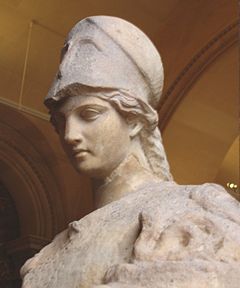
In Greece, according to Velikovsky, planet Venus was originally named Athena.
Tags: ancient history, Athena, Bull of Heaven, crete, etymology, Gilgamesh, Greece, Jupiter, Linear B, Master Impression, minoan, Minotaur, Mycenaean, mythology, Phoenicia, planetary science, Poseidon, science, Snake Goddess, Velikovsky, venus
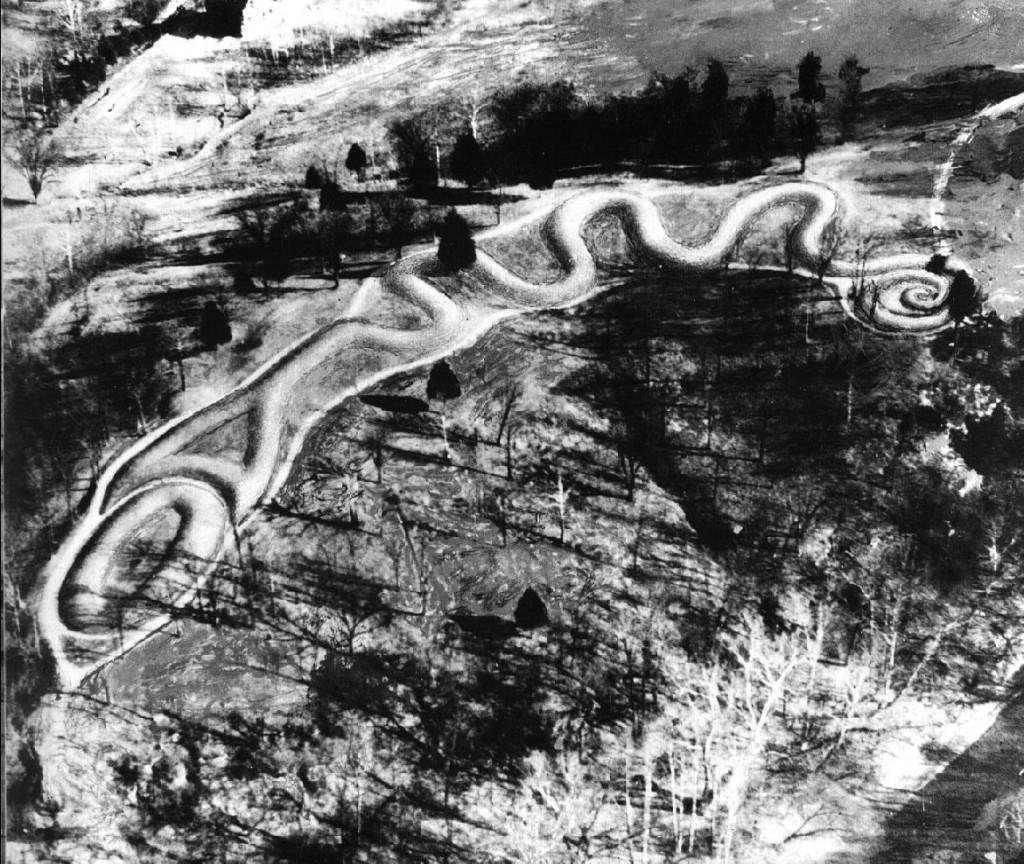
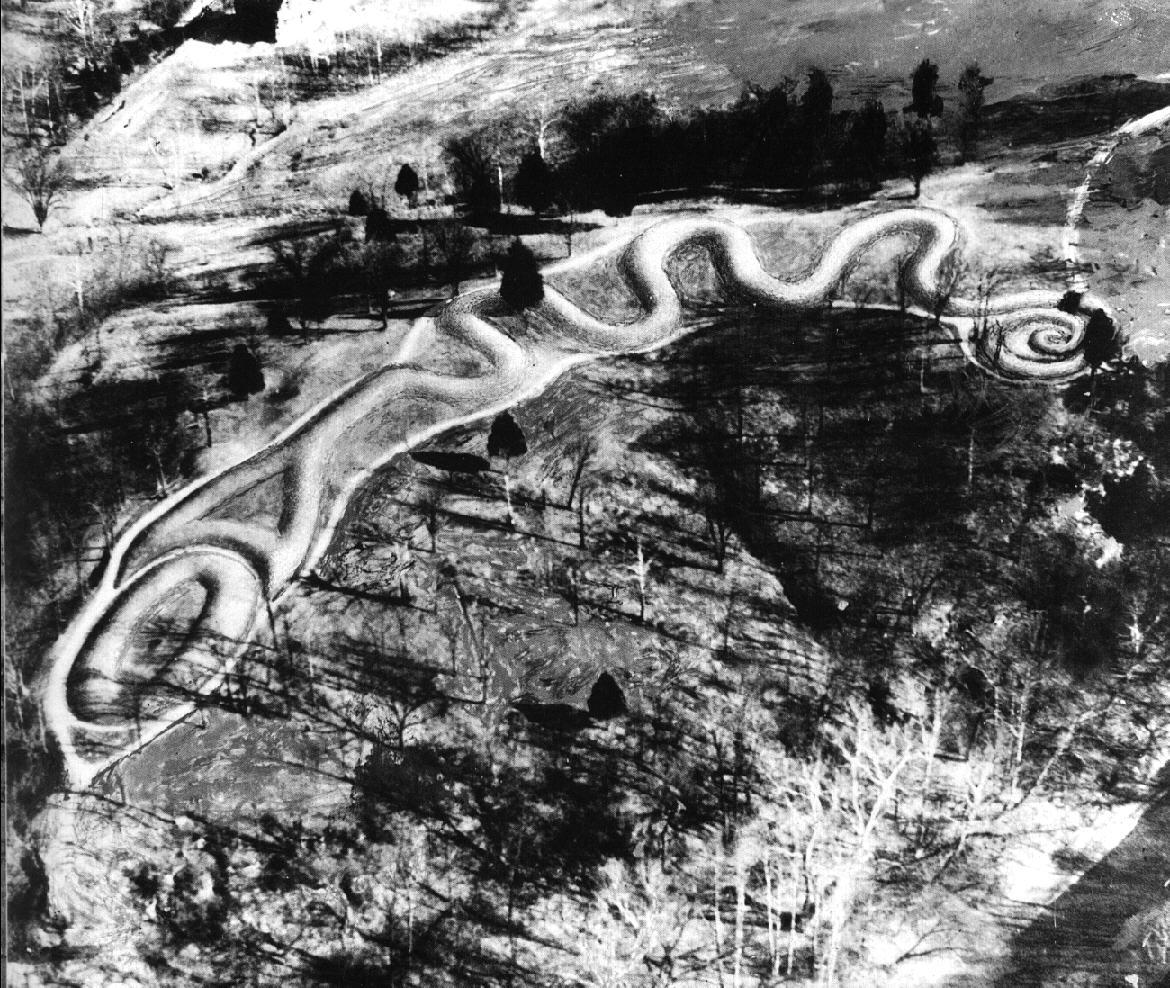
411-meter long Great Serpent Mound in Ohio is the world’s longest effigy monument. Archaeological investigations have yielded conflicting results about its initial construction date, and various theories regarding its meaning have failed to gain traction. But a Revised Venus Theory–one that modifies Immanuel Velikovsky’s theory that the planet Venus was originally a comet that approached the Earth and caused great devastation–neatly matches key characteristics of the Great Serpent Mound.
Recently, this Revised Venus Theory has gained additional credibility from a commonsensical explanation of how a comet-like Venus could have seemed to emerge from Jupiter as in ancient Hindu and Greek myths (Jupiter’s gravity pulled it from the outer solar system), including a simple, obvious reinterpretation of the Metis myth. Much new evidence has also emerged. And the theory has found powerful substantiation from a reinterpretation of the headdress of Queen Nefertari of Egypt, consort of Pharaoh Ramses II, in this image from Abu Simbel (Ramses II’s headdress appears to contain Mars with two moons and a tail, either borrowed from Venus in an encounter or from Martian dust stirred up by an encounter).
Tags: Ancient Egypt, Ancient North America, catastrophe, comet, iconography, planetary science, serpent mound, Velikovsky, venus
 If we can interpret certain ancient myths correctly, they could lead us to more accurate and penetrating views of the history of the Earth and the solar system. They might teach us about the forces at work and explain anomalies bequeathed to us by a long-hidden past. But how can we interpret these myths, the products of minds so far removed from ours? How do we know which interpretation is correct, if any? Are we doomed to speculate without ever achieving certainty?
Here we will interpret two Bronze Age myths to illustrate the high scientific value such myths might contain. We will also see how easy it can be to understand a myth once the right interpretation becomes available.
Tags: Ancient China, Ancient Greece, Bronze Age catastrophes, comets, earth science, history of solar system, interpretation of myths, Jupiter, myths, philosophy of science, planetary science, Velikovsky, venus, Zeus
 Sometimes we just need to listen carefully. Definitely in regard to Karnak.
Egyptian priests told Herodotus, a careful listener, that four times since Egypt had become a kingdom “the Sun rose contrary to his wont; twice he rose where he now sets, and twice he set where he now rises.”
This evidence, and much else, was interpreted by
Tags: alignment, Amon-Re, Ancient Egypt, archaeoastronomy, Gerald Hawkins, Herodotus, inversion, Karnak, Khonsupakerod, Middle Kingdom, New Kingdom, Norman Lockyer, orientation, Serabit el Khadim, Tanis, temples, Theban Hills, Velikovsky, venus
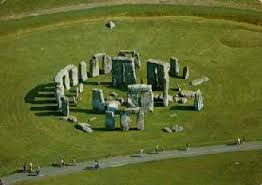 One of the world’s most famous monuments, Stonehenge abounds in mysteries and anomalies.
Why was Stonehenge built in the first place? Why was it radically transformed shortly before 2500 BC into a masterpiece of megalithic architecture? What explains the intricate, changing patterns of the stones over time? Why the extraordinary effort?
We now have answers to these and other questions, but to get to them we need to set aside preconceptions and come to terms with something that isn’t simple.
Tags: archaeoastronomy, Bronze Age catastrophes, Durrington Walls, eclipses, interpretation of myths, inversions, megalithic, Silbury Hill, Stonehenge, Velikovsky, venus
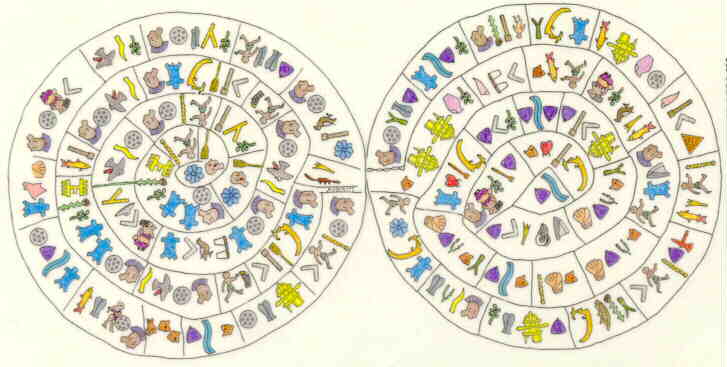 The famous spiral disk found in Phaistos, Crete in 1908 has long defied efforts to translate it or even to identify the language in which it is written or what kind of a document it might be (it is here in color to aid analysis). Though many scholars and amateurs have proposed theories and even translations, none has seemed persuasive to the great majority of observers. A skeptical view holds that the disk is a forgery, but most scholars reject this. Many scholars agree that the small sample of language in the disk makes a breakthrough very unlikely unless and until other samples of the writing are found.
Tags: Ancient Greece, ancient history, crete, Etruscan, linguistics, Phaistos disk, Trojan