
Studies by Japanese researchers show that gargling is protective against respiratory infections. Here is a letter that lays out the case for gargling against COVID-19.

Studies by Japanese researchers show that gargling is protective against respiratory infections. Here is a letter that lays out the case for gargling against COVID-19.
 In his Worlds in Collision (1950), pioneer scientist Immanuel Velikovsky put forward a theory that Earth had inverted during the Bronze Age Catastrophes; but many scientists considered his proposed electromagnetic cause unpersuasive. In 1982 British physicist Peter Warlow, otherwise a Velikovsky supporter, presented a gravitational explanation. Here Stephen J. Dillon and Kenneth J. Dillon of Scientia Press discuss Warlow’s The Reversing Earth (1982) and its role in the debate over Velikovsky’s theories and findings. See also https://www.scientiapress.com/theory-of-the-reversing-earth.
 Originating in Eastern Europe, Halotherapy uses aerosol microparticles of salt to treat respiratory conditions. While it has shown effectiveness against asthma, bronchitis, and other chronic respiratory conditions, there is evidence that HT is also effective as prophylaxis against respiratory infections. In this video, Viktoria Nagudi discusses with Kenneth Dillon of Scientia Press the history, modalities, applications, and potential benefits of HT in the context of the COVID-19 pandemic, including for reopening the economy and schools. See also https://www.scientiapress.com/halotherapy.
 The Theory of the Reversing Earth was a key component of Immanuel Velikovsky’s Venus theory in which he contended that close passages of Venus caused Earth to topple over four times during the Bronze Age catastrophes. Now we have a Revised Venus Theory that corrects inadequacies of the original theory and provides a cause of the inversions as well as approximate dates (2200, 1628, 1210, and 820 BC), an array of new evidence, and a link to the great mass extinctions of prehistory. Viktoria Nagudi interviews Kenneth J. Dillon of Scientia Press. 9 Likes, 0 Dislikes.
Historia n and scientific researcher Kenneth J. Dillon explains his The Martian Theory of Mass Extinctions. For most of the past 4 billion years, the orbits of Mars and Earth were more eccentric than at present, and they intersected. The closest approaches of Mars led to the great mass extinctions of prehistory, while more distant approaches might account for many minor extinctions as well. The theory shows why the extinctions were serial events, why they differed in size, how they shaped the surface of Mars, and what made them so terrifically devastating. For further information, see https://www.scientiapress.com/extinctions.
 Viktoria Nagudi interviews Kenneth J. Dillon of Scientia Press about his Theory of the Red Blood Cells. According to the theory, the red blood cells, acting as a metacolony in real time, form the dermal-optic photoreceptor, the animal magnetoreceptor, the solution to the binding problem of consciousness, the ultrasensitive Psi receptor, and the chemiluminescent Original Immune System. See also https://www.scientiapress.com/theory-of-the-red-blood-cells and Kenneth J. Dillon, Rosemarie: a Novel of Discovery Science. Washington, D.C.: Scientia Press, 2021.
Even though much inhaled COVID-19 virus immediately penetrates into the lungs, some remains in the throat where it replicates to very high numbers–for instance, a peak at 711,000,000 RNA copies per throat swab day 4 (Wölfel R et al. Nature 2020;Apr 1). According to a Reinforcement Model of COVID-19 infections, many of these replicates descend into the lungs, where they furnish a stream of reinforcements that cumulatively outweigh the replication of the initial penetrating dose. Hence treating the throat with gargling seems highly desirable.
 Here are three overlooked methods of treating respiratory and disseminated infections that resemble the one caused by the COVID-19 virus.
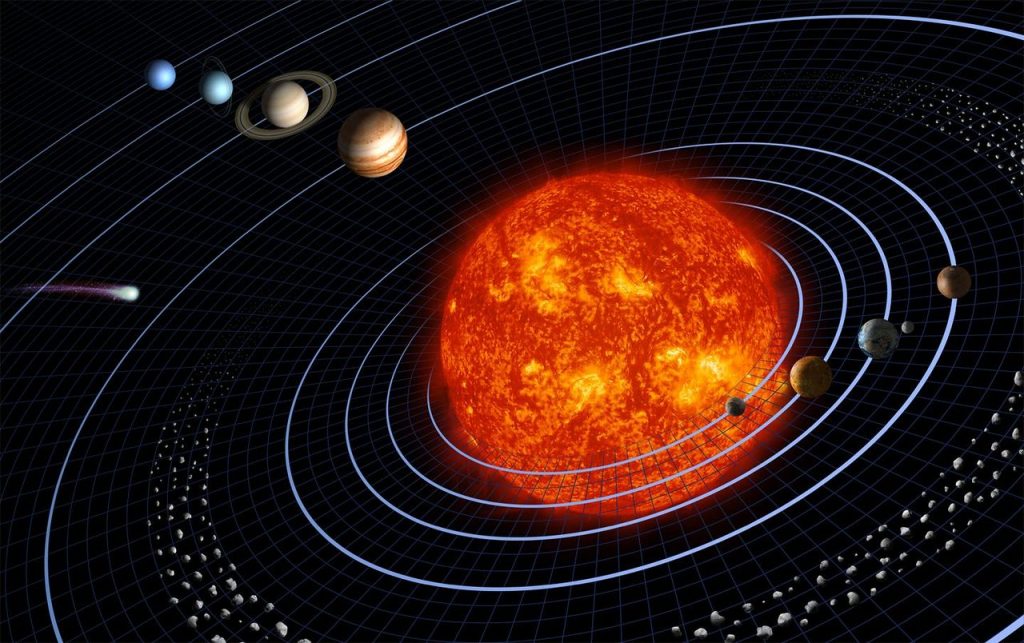 A new theory of the origin of the terrestrial planets—that Jupiter’s gravity pulled them inward from the outer solar system—solves longstanding scientific riddles and offers a rich agenda for further investigation.
 There are two sides to every story. Judges rightly admonish juries to check out both sides before coming to a conclusion. Our entire system of adversarial justice is built on this principle. But under surveillance by FBI in the 2001 anthrax mailings case, U.S. Army scientist Bruce Ivins committed suicide. So only one side got to tell its version of the story.
Upon closing the case on February 19, 2010, FBI issued an Amerithrax Investigative Summary that concludes that Ivins was the anthrax mailer. The Summary contains serious errors as well as minor ones. It also omits crucial information. So, to ensure a fair outcome, we need to look at it through the eyes of a defense attorney, to make sure that the American people can check out both sides of the story before coming to a conclusion.
Here are the judge’s March 16, 2020 Order and Memorandum opinion giving his final ruling. For a general explanation of the anthrax mailings case, see Was Abderraouf Jdey the Anthrax Mailer? The judge does not appear to have read it.
Of the documents, the first set was released by FBI in the course of the litigation. The second set includes selected lawsuit documents from Dillon v. U.S. Department of Justice. Following this is a discussion of possible destruction of evidence.
The first set includes 102 pages of emails to and from accused Mailer Bruce Ivins, released by FBI on court order on March 20, 2019, plus Laboratory Notebook 4282. FOIA request #1327397 sought Ivins’s emails and other documents for September and October, 2001. FOIA request #1329530 sought the Table of Contents and the 16 pages on Ivins from the 2000-page Interim Major Case Summary of 2006. After repeated failures to find emails, FBI experts located them as 1A attachments in the Amerithrax file.
Kenneth J. Dillon has a Ph.D in history from Cornell University and has taught at several universities.