 Sekhmet (“The Mighty One”), lioness goddess of ancient Egypt, spread terror with her bloody rampages. Yet she became the protector of kings and a favorite personal goddess of millions of Egyptians.
Why did Egyptians have a goddess who required such assiduous and even obsessive propitiation? Why did other Egyptian goddesses play roles similar to Sekhmet’s? What explains Sekhmet’s dual nature as destroyer and protector? Why did Egyptians call her the Eye of Ra? Why did she originally appear with an oval disk on her head?
We now have good answers to these questions. But in order to understand them, we need to see why we should think that Sekhmet was Planet Venus. And that requires us to investigate a major case of scientific rejectionism.
Tags: Ancient Egypt, Bastet, Bronze Age catastrophes, Egyptian medicine, Hathor, isis, Mars, Mut, myth, Ra, Sekhmet, Tefnut, Velikovsky, venus

Rosemarie, A Novel of Discovery Science
As she struggles with a rare disease at the American Embassy in Turkey, philosopher Rosemarie devises a theory of the red blood cells. Acting as a metacolony in real time, they constitute the Original Intelligence of humankind’s pre-neuronal ancestors and possess remarkable properties. Peculiar dreams lead Rosemarie to other theories. They also warn of terrorist attacks. Her diplomat husband is wounded fighting off jihadists. The ambassador is smitten by her charms. A CIA psychiatrist stigmatizes her with a fraudulent diagnosis. Entranced by a Turkish folktale, Rosemarie befriends a handsome young Turk….
Readers say:
“Excitement and intellectual depth.”
“The ending was very satisfying.”
“[I]t’s a good read and I recommend it.” (Goodreads)
Goodreads rating: 4.5 stars
See the author’s biosketch at About Us.
Tags: Biophotonic Therapy, cellular basis of consciousness, discovery science, Dreams, magnetoreceptor, Martian Theory of Mass Extinctions, Outer Solar System Origin of the Terrestrial Planets, philosophical counseling, psychic, Psychology, scientific theory, terrorism, Theory of the Red Blood Cells, ultrasensitive psi receptor, Velikovsky
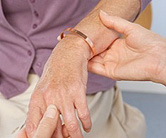
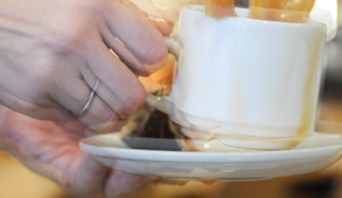
 After signing a consent form, a 70-year old semi-retired male engineer in good general health reported that he had had tremor in his hands, but nowhere else, for 25 years. He recalled his father having had the same tremor. A general practitioner had diagnosed this engineer’s case as familial tremor. He had also heard it termed “anticipatory tremor”—it occurred mainly when he moved his hands to undertake some action.
Over time the tremor had gained in amplitude. When he held a piece of paper, he had a hard time reading because his hands would shake. When he lifted up a briefcase, his hand would “go wild”, with jerks of a full inch back and forth. However, the tremor was not so bad as significantly to disrupt his manual activities at work. He is right-handed. The tremor was worse in his left hand than in his right at a ratio that he estimated as 3:2.
Tags: copper, copper bracelets, essential tremor, iron, medicinal bracelets, neurology, transdermal, transdermal micronutrition, tremor, zinc
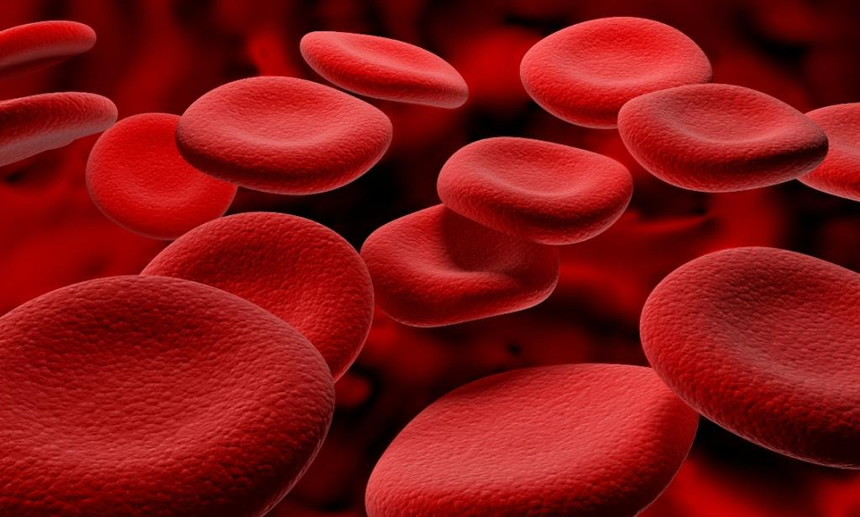
Acting in a coherent fashion, the red blood cells play a more important role in life processes than is commonly known.
The red blood cells’ unique, remarkable role in oxygen and carbon dioxide transport sharply distinguishes them from the body’s other cells. So do their anaerobic energy metabolism, peculiar biconcave shape, 120-day life cycle (with 2,000,000 new RBCs formed every second), iron content, and extremely high hemoglobin content (roughly 270 million hemoglobin molecules are packed into each one of 25 trillion RBCs). While their counterparts in many vertebrates and invertebrates retain the nuclei and organelles that mammalian RBCs eject in the course of maturation, the erythrocyte group in general exhibits certain “prokaryotoid” characteristics,
Tags: astrocyte, biophotonics, consciousness, dermal optics, erythrocyte, magnetoreceptor, neuroscience, psi receptor, red blood cell
 Music therapy is a field that is attracting increasing interest from psychologists, therapist, and neuroscientists. As a sensory experience that can activate all areas of the brain at once, its use in therapeutic contexts has been shown to improve emotional and cognitive functioning while reducing stress. The benefits of music therapy and its target audience vary widely. It can help cheer up mental health patients and give them a new way to express their emotions. Neurologists study its ability to enhance language usage, memory, or motor skills. It’s used in hospitals to support patients who go through painful procedures or prolonged treatments, and it provides cognitive and emotional stimulation to geriatric patients, especially those struggling with dementia. Usually the treatment consists of therapists, musicians, or patients playing instruments or singing.
Tags: church music, depression, music therapy, organ
 In this video, Tom Lowe, director of Physicians Awareness UBI, and Kenneth J. Dillon, author of Healing Photons, discuss the history, science, challenges, and promise of Biophotonic Therapy. Also known as ultraviolet blood irradiation, BT treats small amounts of blood with light in extracorporeal or intravenous modes. BT was invented by Emmet Knott in the 1920s. Hundreds of clinical studies have shown its effectiveness in various indications, e.g., against childhood asthma. Thousands of practitioners around the world use it to treat a wide range of disorders. BT is the leading phototherapeutic treatment of infectious diseases.
Tags: Biophotonic Therapy, biophotons, chemiluminescence, Emmet Knott, infectious diseases, intravenous laser therapy, red blood cells, UBI, ultraviolet, Ultraviolet Blood Irradiation
Biophotonic Therapy uses light in an extracorporeal or intravenous mode to activate the red blood cells, a form of immunity inherited from humankind’s distant oligocellular ancestors. BT has an instructive 100-year history; a range of modalities; well-characterized mechanisms of action; a wide array of indications; several counterindications; well-understood, limited side-effects in certain cases; and a scientific literature that now includes more than 400 articles as well as a score of books. No drug resistance to BT has ever been reported.
Tags: biophotonics, blood, infectious diseases, irradiation, photoluminescence, phototherapy, ultraviolet