 Viktoria Nagudi interviews Kenneth J. Dillon of Scientia Press about his Theory of the Red Blood Cells. According to the theory, the red blood cells, acting as a metacolony in real time, form the dermal-optic photoreceptor, the animal magnetoreceptor, the solution to the binding problem of consciousness, the ultrasensitive Psi receptor, and the chemiluminescent Original Immune System. See also https://www.scientiapress.com/theory-of-the-red-blood-cells and Kenneth J. Dillon, Rosemarie: a Novel of Discovery Science. Washington, D.C.: Scientia Press, 2021.
Theory of the Red Blood Cells
Tags: binding problem of consciousness, cellular basis of consciousness, dermal optics, magnetoreception, psi receptor
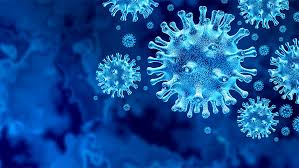
Even though much inhaled COVID-19 virus immediately penetrates into the lungs, some remains in the throat where it replicates to very high numbers–for instance, a peak at 711,000,000 RNA copies per throat swab day 4 (Wölfel R et al. Nature 2020;Apr 1). According to a Reinforcement Model of COVID-19 infections, many of these replicates descend into the lungs, where they furnish a stream of reinforcements that cumulatively outweigh the replication of the initial penetrating dose. Hence treating the throat with gargling seems highly desirable.
Tags: coronavirus, COVID-19, gargling, green tea catechins, hypertonic saline, mouthwash, pandemic, povidone-iodine, respiratory infections, throat, viral replication
 A 52-year old male in generally good health began to feel soreness and painful twinges in his fingers. The inflammation was not in the knuckle joints but rather in the tissue surrounding them, which became increasingly red and sensitive to touch. Having previously used Vitamin C (ascorbic acid) and methotrexate in succession to treat a case of idiopathic thrombocytopenic purpura, and having an old prescription for methotrexate, he obtained methotrexate from an online pharmacy and began to take it.
Tags: arthritis, ascorbate, ascorbic acid, finger pain, idiopathic thrombocytopenic purpura, methotrexate, myalgia, rheumatology, Vitamin C
 Here are three overlooked methods of treating respiratory and disseminated infections that resemble the one caused by the COVID-19 virus.
Tags: Biophotonic Therapy, coronavirus, COVID-19, gargling, halotherapy, immunostimulants, respiratory infections, virus, Wuhan coronavirus, Xi virus

There are two sides to every story. Judges rightly admonish juries to check out both sides before coming to a conclusion. Our entire system of adversarial justice is built on this principle. But under surveillance by FBI in the 2001 anthrax mailings case, U.S. Army scientist Bruce Ivins committed suicide. So only one side got to tell its version of the story.
Upon closing the case on February 19, 2010, FBI issued an Amerithrax Investigative Summary that concludes that Ivins was the anthrax mailer. The Summary contains serious errors as well as minor ones. It also omits crucial information. So, to ensure a fair outcome, we need to look at it through the eyes of a defense attorney, to make sure that the American people can check out both sides of the story before coming to a conclusion.
Tags: al Qaeda, anthrax mailings, biodefense, Bruce Ivins, FBI, Jdey, terrorism
A new pilot study plus a better understanding of the science and art of gargling suggest that it can be an effective adjuvant therapy against COVID-19. At the same time, gargling can protect others, so we all have a vested interest in persuading each other to gargle. In this video, Viktoria Nagudi discusses with Kenneth Dillon of Scientia Press gargling’s history, science, choice of gargles, and applications, including to reopening the economy and schools. For further details, see https://www.scientiapress.com/mouthwash-oral-respiratory-infections.
Gargling versus COVID-19
Tags: COVID-19, EGCG, gargling, povidone-iodine, respiratory infections