 Kenneth J. Dillon
 Kenneth J. Dillon
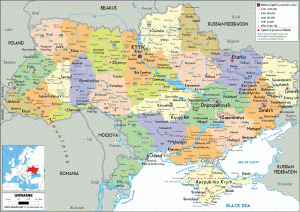
 [December 13, 2023] If Congress rejects further U.S. military and financial support, the valiant Ukrainians and their democratic allies face a disastrous defeat.
To find other options, this writer brainstormed with Chat GPT. Our discussion led to a plan to form a U.S.- and EU-backed Coalition of the Willing, including Canada, the UK, Scandinavia, Germany, Poland, Baltic countries, and perhaps France as well as Japan, Korea, and Australia. While positioning troops, weapons, and materiel in Western Ukraine is not a realistic option at present, it might become a serious possibility if Russia advances and appears poised to conquer all of Ukraine. The U.S. would be a non-paying member that would supply intelligence, diplomacy, and coordination until such time as Congress might vote for funding.
 If neither the US nor the EU will fund Ukraine, ChatGPT and I discussed how American corporations could find it in their interest to collaborate deeply with Ukraine in the area of AI.
The failure of the US to fund Ukraine puts it at risk of a disastrous defeat at the hands of a merciless Russia. ChatGPT and I discussed several options for Ukraine in finding financing.
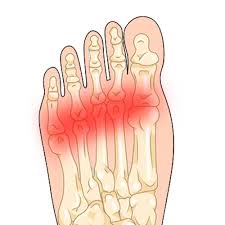 Metatarsalgia, pain in the metatarsal/forefoot area, is a common foot problem. In milder cases, it can be managed with pads, supportive footwear, adequate rest, NIAIDs, and other remedies. However, some cases become more severe over time. They cause considerable pain and undermine mobility. Among the treatments that help manage the syndrome, prolotherapy has won a number of adherents. It involves injections of dextrose, often mixed with an anesthetic. The injections stimulate natural healing. But prolotherapy is not necessarily the best option.

Concerned over shortages of face masks, U.S. medical authorities initially discouraged the use of face masks by the public. But a good deal of evidence (Jefferson T 2007) shows that face masks reduced the risk of infection by 68% in SARS, an analogue of COVID-19. This suggests that wearing face masks can go far toward slowing the spread of the pandemic. Therefore, we need to find a way to provide enough of them not just to protect medical personnel but also to protect the public. Reusing them seems a very attractive strategy.

Studies by Japanese researchers show that gargling is protective against respiratory infections. Here is a letter that lays out the case for gargling against COVID-19.
 In his Worlds in Collision (1950), pioneer scientist Immanuel Velikovsky put forward a theory that Earth had inverted during the Bronze Age Catastrophes; but many scientists considered his proposed electromagnetic cause unpersuasive. In 1982 British physicist Peter Warlow, otherwise a Velikovsky supporter, presented a gravitational explanation. Here Stephen J. Dillon and Kenneth J. Dillon of Scientia Press discuss Warlow’s The Reversing Earth (1982) and its role in the debate over Velikovsky’s theories and findings. See also https://www.scientiapress.com/theory-of-the-reversing-earth.
 Originating in Eastern Europe, Halotherapy uses aerosol microparticles of salt to treat respiratory conditions. While it has shown effectiveness against asthma, bronchitis, and other chronic respiratory conditions, there is evidence that HT is also effective as prophylaxis against respiratory infections. In this video, Viktoria Nagudi discusses with Kenneth Dillon of Scientia Press the history, modalities, applications, and potential benefits of HT in the context of the COVID-19 pandemic, including for reopening the economy and schools. See also https://www.scientiapress.com/halotherapy.
 Advances in antioxidant therapy have led to significant benefits in many areas of human health. Vitamins C and E, phytochemicals like lycopene in tomatoes, and oral zinc have found relatively widespread use as prophylactics and treatments of bronchial asthma, cancer, and other disorders.
Still, the results of clinical trials of Vitamins C and E against atherosclerosis have been disappointing. Yet they were predictable because oxidative processes go on inside of arterial walls, whereas Vitamins C and E are known to operate only in the plasma and lipid membranes.
Meanwhile, statins can be effective antioxidants in cardiovascular disorders (Shishehbor et al., 2003a; Shishehbor et al. 2003b). Unfortunately, statins are rather expensive and may have unacceptable side effects.
Kenneth J. Dillon has a Ph.D in history from Cornell University and has taught at several universities.
 Given the blockage of funding from the US and EU, could Ukraine obtain stopgap financing from Big Tech corporations with interests at stake? ChatGPT and I discussed options.