
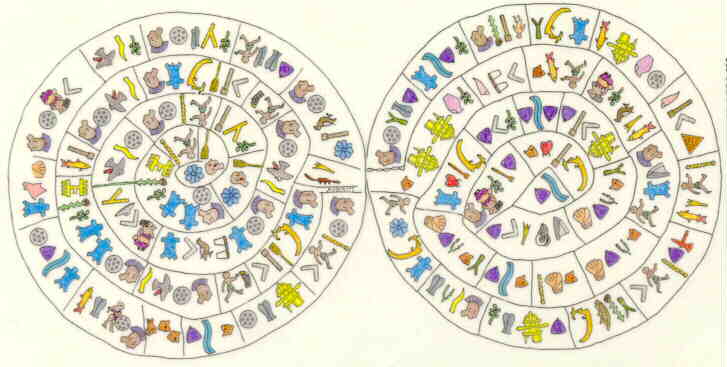
 The famous spiral disk found in Phaistos, Crete in 1908 has long defied efforts to translate it or even to identify the language in which it is written or what kind of a document it might be (it is here in color to aid analysis). Though many scholars and amateurs have proposed theories and even translations, none has seemed persuasive to the great majority of observers. A skeptical view holds that the disk is a forgery, but most scholars reject this. Many scholars agree that the small sample of language in the disk makes a breakthrough very unlikely unless and until other samples of the writing are found.
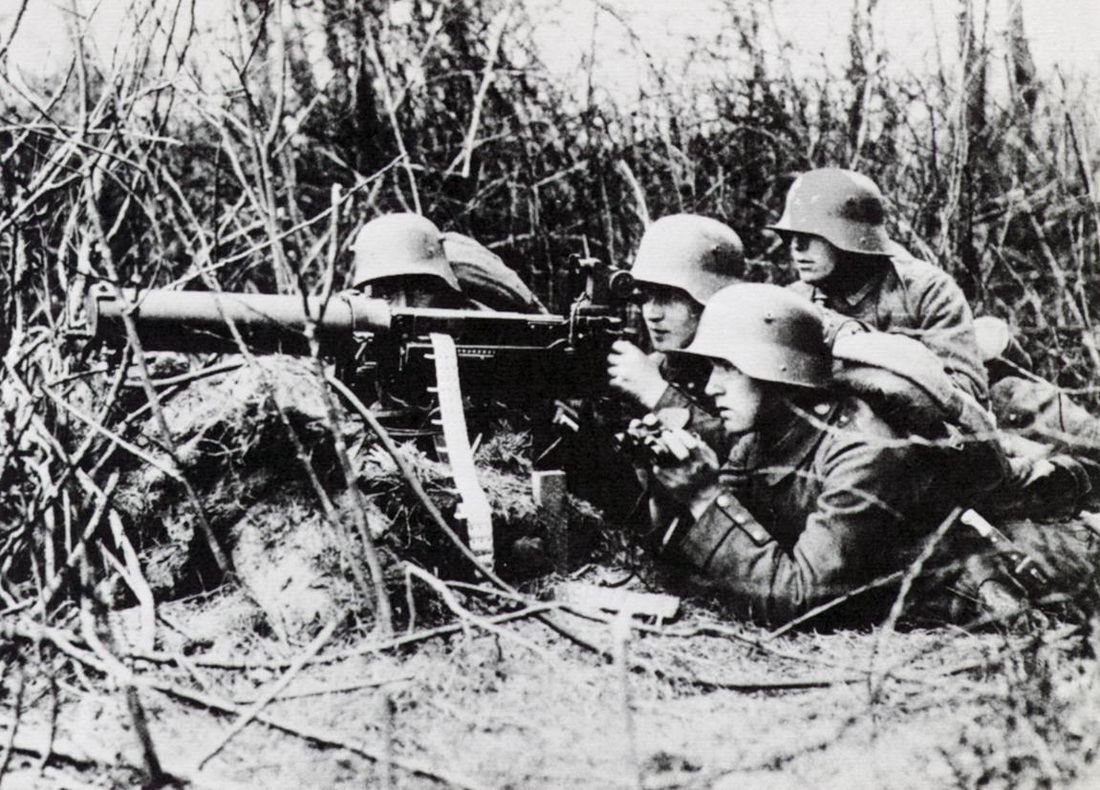 In World War I Imperial Germany faced the daunting task of fighting Great Britain, France, and Russia (replaced in 1917 by the United States) at the same time. Mindful of the unfairness inherent in passing judgment in hindsight, we can usefully ask whether Germany might have won the war even against these odds had it not made too many serious mistakes. “What if?” history of this sort can help us understand better what actually happened, and it can provide precautionary lessons for the future. Here is a list of key German mistakes, omitting errors at the battlefield level, in this colossal human tragedy.
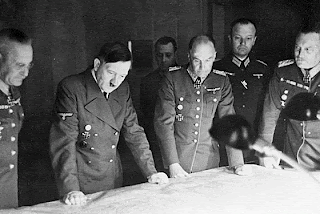
By all accounts, Nazi Germany made serious errors in waging the Second World War that kept it from achieving much greater success, though whether it could have won the War remains open to doubt, given the American effort to develop nuclear weapons. Also, Japanese mistakes need to be taken into consideration. At any rate, asking “What if” questions about German strategy can help us better understand what actually happened.
Here is a list of key German mistakes that can guide our thinking about the many lessons we can learn from this greatest of wars (not included are significant errors at the battlefield level such as at Dunkirk and Stalingrad). Of course, this list assumes that Germany’s decision to go to war in the first place and with the goals it had for doing so made sense. I thank my students for their contributions to the list.1
 When Japan went to war against the United States in 1941, its chances of winning were slim, indeed. But it is worth asking what steps Japan might have taken, or what mistakes it might have avoided, to increase the likelihood of greater success and possibly even victory.
 The death of George Floyd in Minneapolis on May 25, 2020 set off a nationwide surge of protests over police brutality against African-Americans. On April 20, 2021, the jury found Derek Chauvin, the police officer who pressed his knee on Floyd’s neck for nine minutes and 29 seconds, guilty of murder in the second and third degrees and manslaughter in the second degree. Worldwide attention to Floyd’s death has focused on racial disparities in the United States as well as on the specific issue of police brutality against African-Americans.
Still, even though the jury has come to its verdict, to understand our history correctly, we must consider a different possible motive for the killing.
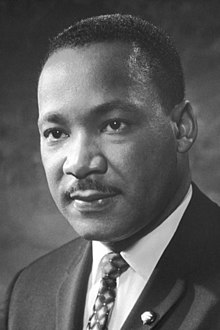 April 4, 1968. Civil rights leader Martin Luther King was killed by a single bullet as he stood on the second floor balcony outside his hotel room in Memphis.1 The shot came from high on his right, not on a horizontal trajectory from the rooming house behind the hotel of the alleged assassin, James Earl Ray. Ray, a mediocre shot, would have needed to stand on the edge of the common bathroom tub to see out the window, and a wall (since conveniently removed) would have kept him from aligning the rifle. Ballistics, forensics, and medical evidence all rule him out. The House Select Committee on Assassinations concluded that there had been a conspiracy, with Ray as the patsy.
Critical researchers have argued that the federal government, especially FBI or perhaps CIA, carried out the assassination
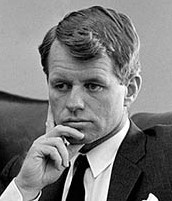 June 8, 1968. Running for the Democratic nomination, Robert F. Kennedy was assassinated in the crowded “pantry” (actually, a food preparation area) of the Ambassador Hotel in Los Angeles after his primary election victory.1 His alleged killer, 24-year old Palestinian-American Sirhan Bishara Sirhan, never got close to Kennedy. He fired shots that hit five bystanders as Kennedy supporters struggled to subdue him; but none of his shots hit Kennedy. The fatal shot behind Kennedy’s ear came from just 1-3 inches away, according to Thomas Noguchi MD, who performed the autopsy.

On October 12, 1964, Mary Pinchot Meyer was murdered on the canal towpath in Georgetown1. A divorced artist from a prominent family, Meyer was known by insiders to have been President John F. Kennedy’s senior female consort during his White House years, though the story never leaked to the public.
Her murder and the ensuing trial of Raymond Crump, Jr., an African-American laborer found by the police in the vicinity of the murder, drew a good deal of attention at the time. Crump had been identified by a gas station attendant helping start a car on a road overlooking the canal. Hearing cries of “Somebody help me. Somebody help me” and two shots, the attendant ran to look.
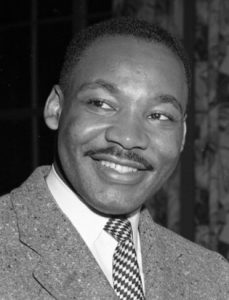
On April 4, 1968, a single bullet from an assassin’s rifle killed renowned civil rights leader Martin Luther King. Many investigators have argued that James Earl Ray, the alleged gunman, was part of a conspiracy, and some have pointed to FBI or CIA. But he pleaded guilty and was treated as a lone gunman. A very few observers have suggested that the KGB perpetrated King’s murder. Now Kenneth J. Dillon of Scientia Press has devised a theory that shows why we should consider the KGB the leading suspect. See https://www.scientiapress.com/kgb-theory. Here Dillon is interviewed by Stephen J. Dillon.
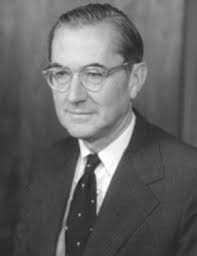 On April 27, 1996, 76-year old William Colby, former director of the CIA, disappeared from his vacation home on the water at Rocky Point, Maryland. Colby had spent the day at a marina fixing his sloop. He returned home after 6 pm, phoned his wife, who was visiting her mother in Texas, and told her he was tired and would eat supper, then go to bed. He watered his trees, met with his gardener and his visiting sister around 7:15 pm (sunset was at 7:57), and fixed himself a meal. The next day there was no sign of him. Eventually, a neighbor phoned the police. They found his supper half-eaten. The computer and radio were on. His canoe was missing.1
By the next day a full-scale search with helicopters and divers was under way.
 August 4, 1962. Celebrity actress Marilyn Monroe died in her bedroom in Los Angeles (or in the guest house near her house, from which she was carried back to her bedroom).1
 After signing a consent form, a 70-year old semi-retired male engineer in good general health reported that he had had tremor in his hands, but nowhere else, for 25 years. He recalled his father having had the same tremor. A general practitioner had diagnosed this engineer’s case as familial tremor. He had also heard it termed “anticipatory tremor”—it occurred mainly when he moved his hands to undertake some action.
Over time the tremor had gained in amplitude. When he held a piece of paper, he had a hard time reading because his hands would shake. When he lifted up a briefcase, his hand would “go wild”, with jerks of a full inch back and forth. However, the tremor was not so bad as significantly to disrupt his manual activities at work. He is right-handed. The tremor was worse in his left hand than in his right at a ratio that he estimated as 3:2.