 Karahunj (Zorats Karer) is an ancient site in southern Armenia that contains more than 230 large stones, some 37 still standing, arranged in a fashion that has suggested to many observers that it was used for archaeoastronomy. But defining how it was used has remained elusive. Complicating the situation, Karahunj is located near a complex of ancient graves; we do not know who built it; it is difficult to ascertain exactly when the stones were set up; and some 85 of them have holes drilled through them that researchers have suggested might be used for sighting celestial objects, but other researchers think this unlikely because they would have been too imprecise.
Nonetheless, there is a rather simple explanation of the stones of Karahunj. But to grasp it, one must become aware of the compelling new evidence for and reinterpretation of
Tags: ancient history, archaeoastronomy, Armenia, Great Serpent Mound, Karahunj, Taosi, Velikovsky, venus
 New evidence and interpretation at the intersection of planetary science and religion can help us better understand the history of the Ancient Near East and of the origins of Islam.
A Revised Venus Theory corrects Immanuel Velikovsky’s original theory that the planet Venus first entered the inner solar system as a comet with a bifurcated tail around 1500 BC (new evidence indicates around 2525 BC). Now we have a much better explanation of the origin of Venus (rather than fissioning off of Jupiter, it was pulled from the outer solar system by Jupiter’s gravity and, via tidal heating, became a comet with a long tail). Venus interacted with the Earth on a 52-year cycle during the Late Bronze Age, causing catastrophes worldwide. And we now have a framework theory of the terrestrial planets into which these phenomena neatly fit and for which there is telling evidence. For Comet Venus, there is also newly interpreted, compelling iconographic and linguistic evidence. The names of both Athena (A Fena, the Phoenician) and Poseidon (Bos eidon, the Bull of Heaven), for instance, referred to the double-tailed Venus.
So with new-found confidence that the Ancients and Velikovsky were right about Venus, we can ask how can we use this to decipher aspects of the culture of the Ancient Near East and of the background of Islam.
Tags: Ancient Near East, Ashur, Astarte, Ishtar, Islam, Kaaba, Mohammed, planetary science, Velikovsky, venus
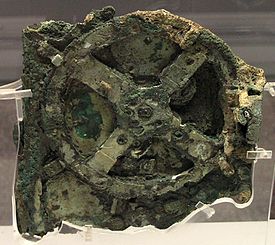
Decades of meticulous investigation have revealed many features of the 1st Century BC Antikythera Mechanism, a portable planetarium that demonstrated the motion of celestial objects. But we must question researchers’ conclusion that the Mechanism incorrectly represented the orbit of Mars, in particular, by roughly 30 degrees during retrograde motion.
This discrepancy seems anomalous in a sophisticated device that otherwise exhibited a much smaller range of error. So maybe there is some other explanation.
Tags: ancient astronomy, Antikythera Mechanism, Bronze Age catastrophes, Immanuel Velikovsky, Jupiter, Mars, planetary science, Revised Venus Theory, venus
 The civilizations of Mesoamerica abounded in mysteries. What caused their fixation on Venus? What led them to develop their intricate, highly precise calendars? What can explain the little pecked-cross circles embedded in the landscape? Why were these peoples so keenly bent on human sacrifice? What were the Aztecs referring to when they said that this was the age of the Fifth Sun?
We have a skeleton key that can unlock these old secrets.
Tags: archaeoastronomy, Aztec, ball game, catastrophes, inversion of Earth, Mars, Maya, Mesoamerica, Olmec, pecked-cross circles, synodical year, Teotihuacan, Toltec, Velikovsky, venus
 In World War I Imperial Germany faced the daunting task of fighting Great Britain, France, and Russia (replaced in 1917 by the United States) at the same time. Mindful of the unfairness inherent in passing judgment in hindsight, we can usefully ask whether Germany might have won the war even against these odds had it not made too many serious mistakes. “What if?” history of this sort can help us understand better what actually happened, and it can provide precautionary lessons for the future. Here is a list of key German mistakes, omitting errors at the battlefield level, in this colossal human tragedy.
Tags: Austria-Hungary, German mistakes, Germany, Kaiser Wilhelm II, Schlieffen Plan, strategy, unrestricted submarine warfare, what-if history, World War I, Zimmermann Telegram
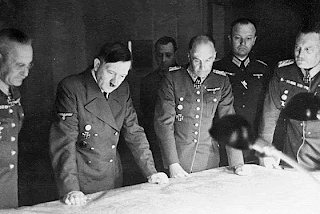
By all accounts, Nazi Germany made serious errors in waging the Second World War that kept it from achieving much greater success, though whether it could have won the War remains open to doubt, given the American effort to develop nuclear weapons. Also, Japanese mistakes need to be taken into consideration. At any rate, asking “What if” questions about German strategy can help us better understand what actually happened.
Here is a list of key German mistakes that can guide our thinking about the many lessons we can learn from this greatest of wars (not included are significant errors at the battlefield level such as at Dunkirk and Stalingrad). Of course, this list assumes that Germany’s decision to go to war in the first place and with the goals it had for doing so made sense. I thank my students for their contributions to the list.
Tags: Adolf Hitler, Axis, Battle of Britain, Eastern Front, Holocaust, japanese strategy, Mussolini, Nazi Germany, prisoners of war, Second World War, war mobilization, Wehrmacht, World War II
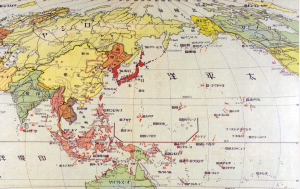 When Japan went to war against the United States in 1941, its chances of winning were slim, indeed. But it is worth asking what steps Japan might have taken, or what mistakes it might have avoided, to increase the likelihood of greater success and possibly even victory.
Tags: Japan, naval warfare, Nazi Germany, Pacific War, Second World War, strategy
 Many Germans have earnestly sought to overcome the Nazi past by publicizing its depredations, by acknowledging wrongdoing, by seeking restitution of stolen property, and by maintaining a respectful, responsive stance toward Jews in general and Israel in particular. Still, such is the burden of the Holocaust that another approach may also prove attractive to certain Germans. It involves Yiddish.
While Yiddish contains elements of Hebrew and Slavic languages, it is mainly an old dialect of German. A German speaker can understand most of it, and in fact Yiddish forms part of the study of German linguistics and literature, correctly understood. This means that a simple initiative could help bring Germans and Jews closer.
Tags: German language, Germans, Germany, Holocaust, Israel, Jews, linguistics, overcoming the past, Yiddish
 The Internal Armed Conflict in Colombia since 1948
by Stephen J. Dillon
El Bogotazo and La Violencia
On April 9, 1948, Jorge Eliecer Gaitán was assassinated in Bogotá, Colombia, and nothing would ever be the same. Gaitán was the leader of the Liberal Party, nicknamed “The People’s Leader” for his social-populist stance, and had been highly influential for nearly twenty years, having successfully mobilized public opinion against the United Fruit Company in 1929, while representing the interests of the oppressed workers of the Banana Zone. He had meetings scheduled for that afternoon with Fidel Castro, then a student activist, and Rómulo Betancourt, former president of Venezuela, but when he went out for lunch, he was killed by Juan Roa Sierra, a young shoeshiner with delusions of grandeur. The circumstances of his assassination remain ambiguous, but a conspiracy is suspected.
Tags: Colombia, drug cartels, drug wars, guerrilla warfare, La Violencia

Every nation has divisive issues. While most are perennials, over time new issues gain salience as others fade. At times of rising political and social tensions, such as the US since 1990, divisive issues multiply and take on a sharper edge.
If we wish to cope with these issues or even resolve some of them, it is useful to have a shared understanding of what they are
Tags: abortion, Affirmative Action, American, American politics, divisive issues, gun control, health care, immigration, military spending, police conduct, reparations

 Karahunj (Zorats Karer) is an ancient site in southern Armenia that contains more than 230 large stones, some 37 still standing, arranged in a fashion that has suggested to many observers that it was used for archaeoastronomy. But defining how it was used has remained elusive. Complicating the situation, Karahunj is located near a complex of ancient graves; we do not know who built it; it is difficult to ascertain exactly when the stones were set up; and some 85 of them have holes drilled through them that researchers have suggested might be used for sighting celestial objects, but other researchers think this unlikely because they would have been too imprecise.1