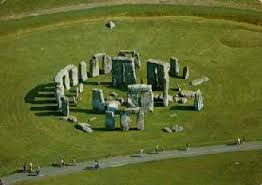
 One of the world’s most famous monuments, Stonehenge abounds in mysteries and anomalies.
Why was Stonehenge built in the first place? Why was it radically transformed shortly before 2500 BC into a masterpiece of megalithic architecture? What explains the intricate, changing patterns of the stones over time? Why the extraordinary effort?
We now have answers to these and other questions, but to get to them we need to set aside preconceptions and come to terms with something that isn’t simple.
Tags: archaeoastronomy, Bronze Age catastrophes, Durrington Walls, eclipses, interpretation of myths, inversions, megalithic, Silbury Hill, Stonehenge, Velikovsky, venus
 There’s no shortage of candidates for the cause of the mass extinctions of prehistory. But experts have found flaws in every one.
Asteroid impact at Chicxulub, Yucatan clearly played a role in the Cretaceous-Paleogene (K-Pg) extinction that wiped out the non-flying dinosaurs 66,000,000 years ago, though scientists point to the serious disruptions that had begun hundreds of thousands of years before with the basalt flows of the Deccan Traps. Giant basalt lava flows that poisoned the atmosphere and oceans played a role in four or perhaps all five major extinctions. But other enormous basalt flows have not caused extinctions, nor did they cause the tsunamis associated with various extinctions. Researchers have suggested many other mechanisms, but there’s no consensus at all.
Lurking in the background, however, is a quite plausible cause, one that would have possessed the power to set off the volcanic activity, air pollution, mass wasting, sea level shifts, loss of oxygen in oceans, climate changes, and other phenomena associated with the extinctions.
The Martian Theory
Tags: catastrophe, Chicxulub, climate change, Deccan Traps, dinosaurs, earth science, extinctions, geology, great mass extinctions, Mars, paleontology, planetary science, prehistory, tsunamis, Valles Marineris
 American history contains two outstanding wrongs committed against groups of us: the killing, displacement, and mistreatment of Native Americans and the subjection of African Americans to slavery and ongoing discrimination. Various thinkers have suggested kinds of reparations for these acts; but views differ sharply on whether reparations are justified, who should pay them, who should receive them, and what amount is fair and feasible. Instead of serving to heal our country, reparations have become one more divisive issue.
Yet reparations offer an alluring vision: via a concrete yet also symbolic national gesture, we could take a major step toward healing wounds, overcoming the past, and moving together into the future. They could counteract the negativity of partisan politics and lead to a happier multiethnic and multiracial society. So we need to think through how to bring Americans to comprehend and support a plan for reparations that will help us flourish as a united people.
Fortunately, a related issue affords us an excellent opportunity
Tags: Affirmative Action, African Americans, American history, Blacks, early intervention, Indians, Native Americans, poverty, reparations, US politics
 Carroll Quigley (1910-1977) was a noted historian, polymath, and theorist of the evolution of civilizations.
Born and raised in Boston, Quigley planned to pursue a career in biochemistry. But he soon shifted to history, to which he brought an analytical, scientific approach and a questing spirit. After receiving a B.A., M.A., and Ph.D in history from Harvard University, he taught at Princeton and Harvard. In 1941 Quigley joined the School of Foreign Service at Georgetown University, where he came to teach a highly regarded course, “Development of Civilization”.
Tags: Bill Clinton, Carroll Quigley, civilization, conspiracy theories, historical analysis, history
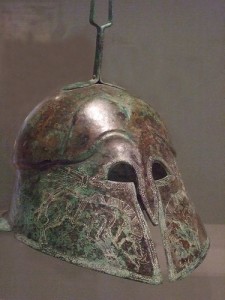 Students have long struggled, often in vain, with the rules of Latin grammar. The structure of sentences in Latin seems strange to the mind of an Indo-European native speaker. Also strange is Latin’s heavy use of gerundive and absolute constructions: all those verbal nouns entail a very different pattern of thinking than goes on in modern Indo-European languages.
Tags: ancient history, Dorians, Etruscan, Greek, Iliad, Ilion, Latin, myths, Roman, Trojan, Troy, Ugric, Ural-Altaic
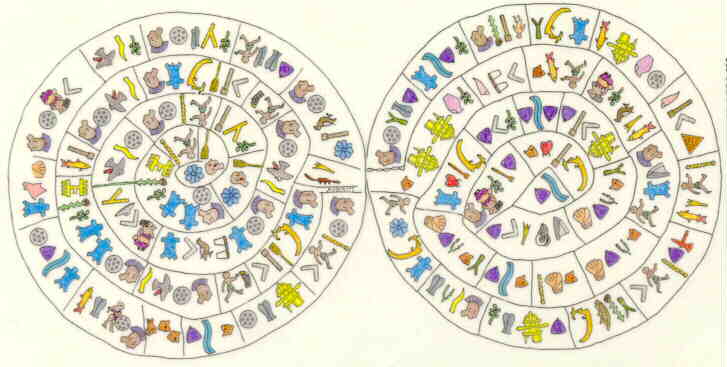 The famous spiral disk found in Phaistos, Crete in 1908 has long defied efforts to translate it or even to identify the language in which it is written or what kind of a document it might be (it is here in color to aid analysis). Though many scholars and amateurs have proposed theories and even translations, none has seemed persuasive to the great majority of observers. A skeptical view holds that the disk is a forgery, but most scholars reject this. Many scholars agree that the small sample of language in the disk makes a breakthrough very unlikely unless and until other samples of the writing are found.
Tags: Ancient Greece, ancient history, crete, Etruscan, linguistics, Phaistos disk, Trojan
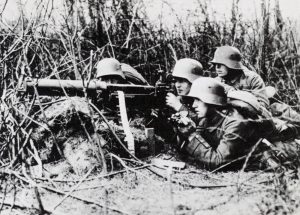 In World War I Imperial Germany faced the daunting task of fighting Great Britain, France, and Russia (replaced in 1917 by the United States) at the same time. Mindful of the unfairness inherent in passing judgment in hindsight, we can usefully ask whether Germany might have won the war even against these odds had it not made too many serious mistakes. “What if?” history of this sort can help us understand better what actually happened, and it can provide precautionary lessons for the future. Here is a list of key German mistakes, omitting errors at the battlefield level, in this colossal human tragedy.
Tags: Austria-Hungary, German mistakes, Germany, Kaiser Wilhelm II, Schlieffen Plan, strategy, unrestricted submarine warfare, what-if history, World War I, Zimmermann Telegram
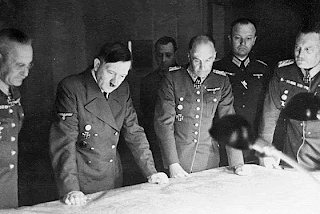
By all accounts, Nazi Germany made serious errors in waging the Second World War that kept it from achieving much greater success, though whether it could have won the War remains open to doubt, given the American effort to develop nuclear weapons. Also, Japanese mistakes need to be taken into consideration. At any rate, asking “What if” questions about German strategy can help us better understand what actually happened.
Here is a list of key German mistakes that can guide our thinking about the many lessons we can learn from this greatest of wars (not included are significant errors at the battlefield level such as at Dunkirk and Stalingrad). Of course, this list assumes that Germany’s decision to go to war in the first place and with the goals it had for doing so made sense. I thank my students for their contributions to the list.
Tags: Adolf Hitler, Axis, Battle of Britain, Eastern Front, Holocaust, japanese strategy, Mussolini, Nazi Germany, prisoners of war, Second World War, war mobilization, Wehrmacht, World War II
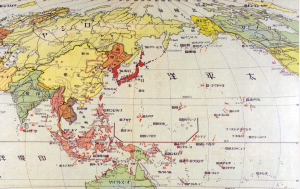 When Japan went to war against the United States in 1941, its chances of winning were slim, indeed. But it is worth asking what steps Japan might have taken, or what mistakes it might have avoided, to increase the likelihood of greater success and possibly even victory.
Tags: Japan, naval warfare, Nazi Germany, Pacific War, Second World War, strategy
 The death of George Floyd in Minneapolis on May 25, 2020 set off a nationwide surge of protests over police brutality against African-Americans. On April 20, 2021, the jury found Derek Chauvin, the police officer who pressed his knee on Floyd’s neck for nine minutes and 29 seconds, guilty of murder in the second and third degrees and manslaughter in the second degree. Worldwide attention to Floyd’s death has focused on racial disparities in the United States as well as on the specific issue of police brutality against African-Americans.
Still, even though the jury has come to its verdict, to understand our history correctly, we must consider a different possible motive for the killing.
Tags: American politics, criminology, Derek Chauvin, George Floyd, Minneapolis, police brutality, racism
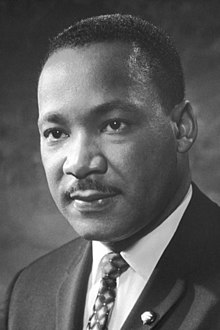 April 4, 1968. Civil rights leader Martin Luther King was killed by a single bullet as he stood on the second floor balcony outside his hotel room in Memphis. The shot came from high on his right, not on a horizontal trajectory from the rooming house behind the hotel of the alleged assassin, James Earl Ray. Ray, a mediocre shot, would have needed to stand on the edge of the common bathroom tub to see out the window, and a wall (since conveniently removed) would have kept him from aligning the rifle. Ballistics, forensics, and medical evidence all rule him out. The House Select Committee on Assassinations concluded that there had been a conspiracy, with Ray as the patsy.
Critical researchers have argued that the federal government, especially FBI or perhaps CIA, carried out the assassination
Tags: assassination, CIA, Eric S. Galt, FBI, J. Edgar Hoover, James Earl Ray, KGB, Martin Luther King, RCMP